Care & repairs
How to Fix Squeaky Floorboards (Timber, Floating and Carpeted Floors)
 Roman Miller14 min read
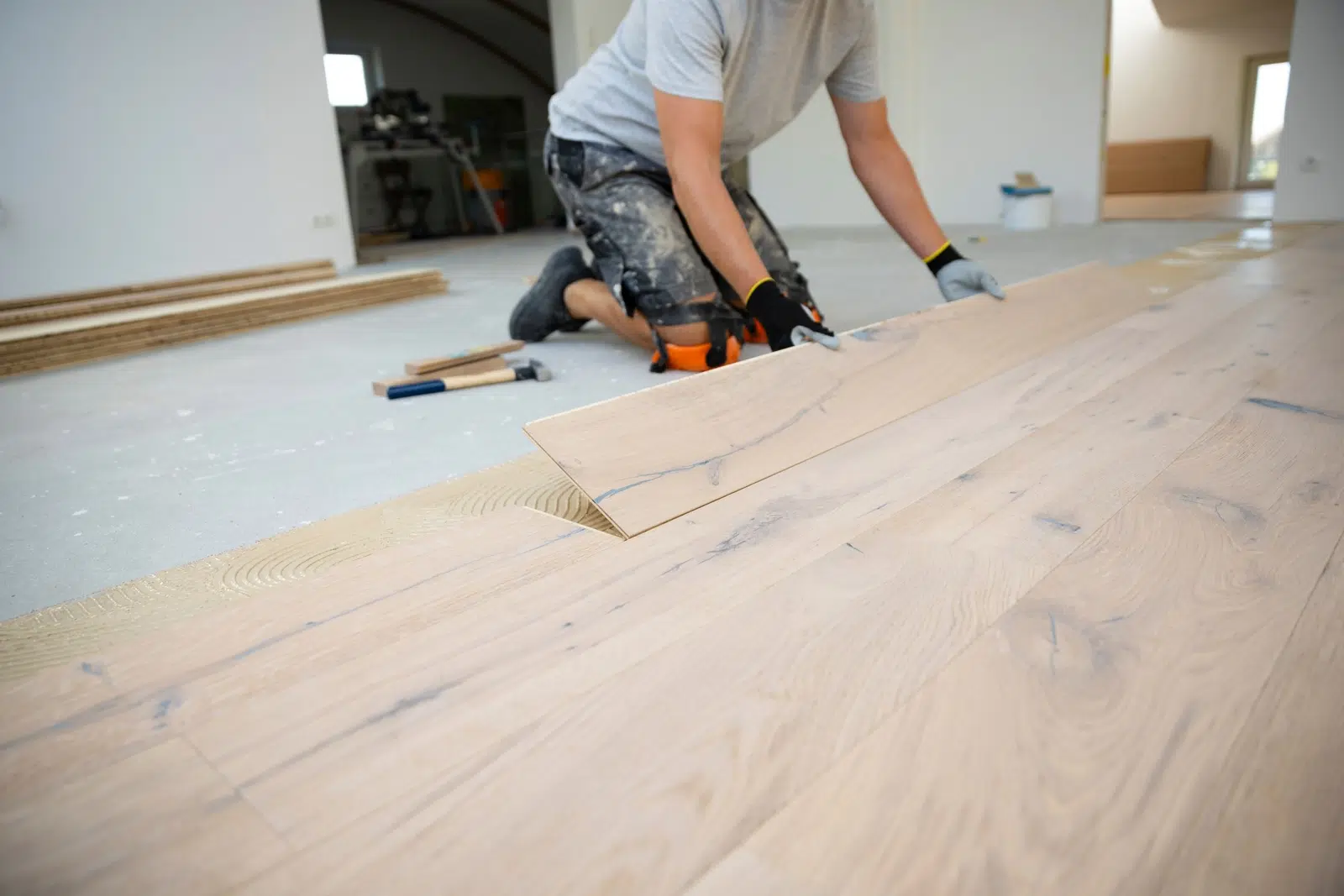
There's a particular creak that everyone in the house learns to avoid. The board outside the bedroom door that announces every late-night trip to the kitchen. The spot in the hallway that groans no matter how gently you walk. Squeaky floorboards rarely mean anything serious, but they're irritating, they wake light sleepers, and over time they can get louder and spread.
The good news is that most squeaks can be fixed, often in an afternoon and without lifting the whole floor. The trick is understanding what kind of floor you have and what's actually causing the noise, because the fix for a Queenslander's hardwood boards is completely different from the fix for a floating hybrid floor in a modern apartment.
This guide explains how to fix squeaky floorboards in every common type of Australian floor: solid timber nailed to joists, floating floors, carpeted floors and sheet subfloors upstairs. We'll show you how to find the squeak, the fixes that genuinely last, the quick tricks that don't, and the warning signs that mean a professional should take a look. The advice comes from our Newstead installers, who track down noisy floors in Brisbane homes week in, week out.
Quick answer
To fix squeaky floorboards, find the board that moves and stop the movement. Screw or secret-nail loose timber boards into the joist below, pre-drilling hardwood, or glue shims into gaps from underneath. Floating floors can't be screwed down, so squeaks usually mean an uneven subfloor, poor underlay or missing expansion gaps. Carpeted floors can be fixed with breakaway screws driven through the carpet.
Why Floorboards Squeak in the First Place
Every squeak has the same root cause: movement. When you step on a board, something shifts slightly and rubs against something else. That rubbing is the noise. Finding what's moving is the key to fixing it.
The most common causes we see are:
- Loose nails. Over decades, nails work their way up as the timber swells and shrinks, leaving the board free to move up and down on the nail shank.
- Boards rubbing against each other. The tongue of one board slides against the groove of the next, especially once the boards have dried out and shrunk slightly.
- Gaps between boards and joists. If a joist has shrunk, twisted or settled, the board above it is no longer fully supported and flexes when you stand on it.
- Seasonal movement. Timber shrinks in dry weather and swells in humid weather. Many Australian floors squeak more in winter, then quieten down when the humidity returns.
- Subfloor sheets rubbing. Upstairs and in newer homes, particleboard or plywood sheets can rub against each other or against the joists.
- Floating floor problems. In floating floors, squeaks usually come from an uneven slab, a worn or thin underlay, or boards pushed too tight against walls or fixed objects.
Step One: Find the Squeak and Your Floor Type
Before you pick up a drill, spend ten minutes investigating. It saves a lot of wasted effort.
- Walk the floor slowly. Step heel to toe across the noisy area, listening for exactly where the sound is loudest. A louder squeak means you're closer to the source.
- Mark the spot. Use painter's tape so you don't lose it.
- Bring a helper if you can get underneath. In homes on stumps, one person walks above while the other watches the joists and bearers below for movement.
- Find the joists. Floorboard nail lines usually show where joists run, typically about 450mm apart. A stud finder also works.
- Work out your floor type. The table below shows why this matters.
| Floor type | How to recognise it | Can you screw it down? |
|---|---|---|
| Solid timber on joists | Narrow boards with visible nail lines, common in Queenslanders and older homes | Yes |
| Timber over sheet subfloor | Boards or carpet over particleboard or plywood sheets, common upstairs | Yes, into the joists |
| Floating floor | Click-together boards with a gap hidden under skirting, often over concrete | No |
| Glue-down engineered timber | Boards bonded directly to a concrete slab | No, needs injection repair |
| Carpet over timber | Carpet laid over old boards or sheet flooring | Yes, with special screws |
How to Fix Squeaky Timber Floorboards From Above
Most squeaks in solid timber floors come from loose boards on joists, and the most reliable fix is to secure the board properly.
What you'll need: a drill, a stud finder or a careful eye for nail lines, a countersink bit, timber screws (or flooring nails and a nail punch), wood filler matched to your floor colour, and fine sandpaper.
- Check for hidden services. Pipes and cables sometimes run close to the underside of the floor. Use a detector, and if you have access underneath, have a look before drilling.
- Locate the joist under the squeaky board.
- Pre-drill a pilot hole. This is essential with Australian hardwoods such as Spotted Gum, Blackbutt and Ironbark, which are dense enough to split if you drive a screw straight in.
- Drive a screw through the board into the joist. Use a screw long enough to bite well into the joist, at least as deep again as the board is thick. Two screws, angled slightly towards each other, hold even better.
- Countersink the head just below the surface.
- Fill and finish. Fill the hole with matching wood filler, let it dry, sand lightly and touch up the coating if needed.
If you'd rather not see screw holes, a flooring nail driven at an angle and punched below the surface, then filled, is a neater option on polished floors. Special trim-head screws with very small heads are another tidy choice.
How to Fix Squeaky Floorboards From Below
If your home sits on stumps or has a crawl space, working from underneath is often the cleanest repair because nothing shows on the finished floor.
- Shims or packers: where you see a gap between a board and the joist, tap in a thin timber shim coated in construction adhesive. Don't force it, or you'll lift the board and create a new hump.
- Timber cleats: screw a short length of timber along the side of the joist, tight up against the underside of the boards, to give them extra support.
- Construction adhesive: run a bead of adhesive along the joint between boards and joist to stop small movements.
- Short screws from below: carefully drive short screws up through a timber block into the board. Choose a length that can't come through the top of the floor.
- Check the joists and bearers: if a whole section moves, the problem may be a loose bearer or a stump that has settled. That's a job for a builder or restumping specialist.
This approach is ideal for Queenslanders, where squeaks often develop as the house settles or the stumps move over the years.
Quick Fixes That Don't Last
You'll see plenty of quick tricks online. Some help for a while, but none fix the cause:
- Talcum powder or powdered graphite brushed into the joints acts as a dry lubricant between rubbing boards. It's fine as a temporary measure for small squeaks between boards, but it wears off.
- Spraying lubricant into joints can stain timber and damage the coating, so we don't recommend it.
- Simply hammering old nails back down rarely holds, because the nail has already lost its grip in the timber.
If a squeak comes back within weeks of a quick fix, the board needs securing properly.
How to Fix a Squeaky Floating Floor
Floating floors, including most hybrid, laminate and click-together engineered timber floors, aren't fixed to the subfloor. That means you can't screw them down. Doing so stops the floor moving with the seasons and usually causes buckling or gaps elsewhere.
Instead, a squeak in a floating floor tells you something about how it was installed:
| Cause | What you'll notice | Fix |
|---|---|---|
| Uneven slab | Squeak or soft "drummy" spot in one area | Lift boards back to the area, level the slab, relay |
| Thin or worn underlay | Hollow, clicky sound across the room | Replace with a denser underlay |
| No expansion gap | Squeaks near walls, sometimes with lifting edges | Trim boards to restore the gap at the walls |
| Floor pinned down | Squeaks near kitchen islands or heavy built-ins | Free the floor from fixed items |
| Damaged click joint | A single board that clicks every step | Replace the board |
Some of these are manageable for a confident DIYer, but lifting and relaying a floating floor without damaging the joints takes care. Our guide on floating vs glue-down flooring explains why preparation matters so much with floating floors.
How to Fix Squeaky Floorboards Under Carpet
Lifting carpet just to silence one board is a big job, so there are tools designed to fix squeaks straight through it.
- Find the joist using a stud finder or by measuring from the nail lines visible near the skirting or doorways.
- Use a carpet squeak-repair kit. These kits include a depth-control guide and special scored screws. You drive the screw through the carpet and underlay into the joist, then snap off the head just below the surface of the board.
- Fluff the carpet pile back over the spot. The repair is almost invisible.
If the squeak is near a doorway or an edge, you can also lift the carpet from its gripper strip, fix the board conventionally, and stretch the carpet back into place.
Fixing Squeaky Sheet Subfloors Upstairs
In many modern two-storey homes, the upstairs floor is made of particleboard or plywood sheets over timber or steel joists, with carpet, timber or hybrid on top. Squeaks here usually come from sheets that have loosened from the joists, or sheet edges rubbing together.
Where you can access the sheets, screw them down to each joist along the noisy area, and add construction adhesive if the floor is being replaced anyway. When the sheets are covered by a finished floor, the carpet method above, or lifting a section of the timber or hybrid floor, is usually needed. Upstairs squeaks are well worth fixing before installing a new floor, because a quiet, stable base makes every type of flooring perform better.
Squeaks in Glue‑Down Engineered Timber
If a glued-down floor squeaks or sounds hollow in a spot, the adhesive has usually let go underneath. A professional can drill small holes, inject a flooring resin to rebond the board, and fill the holes so they're barely visible. Larger areas may need boards lifted and reglued.
Squeaky Floors in Brisbane Homes
Brisbane's climate makes squeaky floors especially common. Our humid summers swell timber, and drier winters shrink it, so floors that are quiet in February can start creaking by July. Older Queenslanders on stumps add another layer, as the house itself can settle and move over decades.
A few local checks are worth making:
- Termites. If a board feels soft, sounds hollow or crumbles at the edges, arrange a timber pest inspection before doing any repairs.
- Moisture under the house. Poor ventilation or drainage under raised homes can cause timber to swell, shrink and rot. Keep the subfloor dry and well ventilated.
- Stumps and bearers. If doors start sticking and whole sections of floor feel uneven, the house may need restumping or relevelling.
- Slab moisture. In slab homes, rising moisture can affect floating floors and glue-down timber, which is why a moisture barrier is so important.
When a Squeak Is More Than a Squeak
Most squeaks are harmless, but some are early warnings of bigger problems. Call a builder, flooring professional or pest inspector if you notice:
- Floors that feel bouncy, spongy or sag underfoot
- Boards that are soft, cracked or crumbling
- Water stains, mould or a musty smell
- Gaps opening up quickly or boards cupping
- Squeaks spreading across a whole room
- Doors and windows that suddenly stick
These signs can point to structural movement, water damage or termites, and catching them early saves a lot of money. If damage is already showing, read about repairing scratched or water-damaged timber to see what's salvageable.
DIY or Call a Professional?
| Situation | DIY friendly? |
|---|---|
| One or two loose boards on joists | Yes, with care and the right screws |
| Squeaks you can reach from under the house | Yes |
| Carpeted floor with a squeak kit | Yes |
| Floating floor needing lifting and relevelling | Usually best left to an installer |
| Glue-down timber with hollow spots | Professional injection repair |
| Bouncy floors, stumps or joist problems | Builder or structural professional |
A small DIY repair usually costs little more than screws, filler and a squeak-repair kit. Professional repairs vary with access and the size of the problem, so it's worth getting the floor assessed before paying for a quote on guesswork.
Safety Tips Before You Start
- Check for pipes and cables before drilling.
- Wear eye protection when drilling, and a dust mask when sanding.
- In homes built before about 1990, old vinyl, its backing or some underlays may contain asbestos. If you need to lift old sheet vinyl or tiles to reach the boards, have it tested first.
- Use the correct screw length so nothing pokes through the other side.
- Take care under raised homes, where access can be tight and uneven.
How to Prevent Squeaky Floors in a New Installation
If you're putting in new floors, the best time to prevent squeaks is before they're laid:
- Screw down loose boards and subfloor sheets before covering them.
- Level the slab properly under floating and glue-down floors.
- Choose a dense, quality underlay for floating floors.
- Leave correct expansion gaps at every wall and fixed object.
- Let timber acclimatise to the room before installation.
- Use a professional installer who checks flatness and moisture before starting.
For apartments, our acoustic underlay guide explains how the right underlay reduces both squeaks and footstep noise.
How to Fix Squeaky Floorboards: FAQs
Why do my floorboards squeak more in winter?
Timber shrinks in drier winter air, which creates tiny gaps between boards and around nails. The boards then move and rub when you walk on them. Many squeaks quieten down again in humid summer months.
Can I fix squeaky floorboards without lifting them?
Yes. Most squeaks in solid timber floors can be fixed from above by screwing the loose board into the joist, or from below using shims, cleats or adhesive if you have access under the house.
Is talcum powder a good fix for squeaky floors?
It's a short-term fix only. Talcum powder lubricates boards rubbing against each other, but it doesn't stop the movement that causes the squeak, so the noise usually returns.
How do you fix a squeaky floating floor?
You can't screw a floating floor down. Squeaks usually mean an uneven subfloor, poor underlay, missing expansion gaps or a floor pinned by heavy fixtures, and these need correcting by lifting and relaying part of the floor.
How do you fix squeaky floorboards under carpet?
Use a carpet squeak-repair kit, which drives a special screw through the carpet into the joist and snaps the head off below the surface, leaving the carpet intact.
Are squeaky floorboards a sign of termites?
Not usually, but they can be. If boards also feel soft, sound hollow or crumble, arrange a timber pest inspection straight away.
Should I use nails or screws to fix squeaky floorboards?
Screws hold far better than nails and are less likely to work loose again. Pre-drill hardwood boards to avoid splitting, and countersink and fill the screw heads for a neat finish.
How much does it cost to fix squeaky floorboards?
Simple DIY fixes cost very little beyond screws, filler and tools. Professional costs depend on access, floor type and the cause, so it's worth having the floor assessed first.
Conclusion: A Quiet Floor Is Usually Closer Than You Think
Squeaky floorboards are one of those household problems that people tend to live with for years, mostly because they assume the fix will be complicated, expensive or messy. In reality, most squeaks come down to one simple thing: a board that has a little room to move. Find the board, work out what's letting it move, and secure it properly, and the noise usually disappears for good.
The key is matching the repair to your floor. Solid timber boards on joists respond well to screws or secret nails driven firmly into the joist, or to shims and cleats fitted from underneath. Carpeted floors can be fixed with a squeak-repair kit without disturbing the carpet. Floating floors are a different story altogether, because screwing them down creates new problems, and a squeak there is really a sign that the subfloor, underlay or expansion gaps need attention.
It's also worth remembering that a squeak is sometimes a messenger. In Brisbane, where homes go through humid summers, drier winters and, in older Queenslanders, decades of settling on stumps, a new or spreading squeak can point to moisture, movement or even termites. If a floor feels soft, bouncy or uneven, it's always better to have it checked than to cover the symptom.
At LKV Flooring, we see every kind of noisy floor, from creaky hardwood in character homes to drummy floating floors in new apartments. We can assess your floor, find the real cause of the squeak and recommend the right repair, whether that's a simple fix, relevelling a section of floating floor or, when a floor has genuinely reached the end of its life, a new installation laid properly from the subfloor up. Our in-house team prepares every floor carefully, levelling slabs, securing loose boards and choosing the right underlay, so your new floor stays quiet and solid for years.
If your floors are creaking, clicking or feeling less solid than they should, we'd love to help. Visit our Newstead showroom, call us on (07) 3890 5173, or book a time with our team, and we'll give you honest advice on getting your floors quiet again.