Care & repairs
How to Clean Laminate Floors Properly (Without Streaks or Damage)
 Roman Miller9 min read
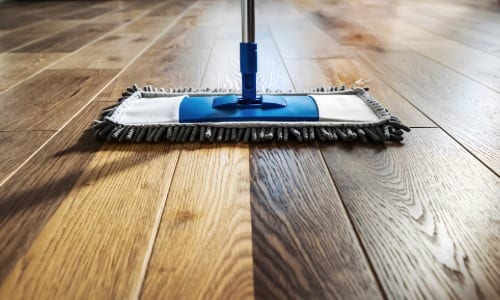
Laminate is one of the most forgiving floors you can own. It resists scratches, fades slowly and never needs sanding or polishing. Yet we regularly see laminate floors that look dull, streaky or swollen at the joins after only a few years, and in nearly every case the damage traces back to how they were cleaned.
This guide shows you how to clean laminate floors properly, so they stay streak-free and undamaged for years. We cover the right tools and cleaners, a step-by-step routine, how often to clean, what to do about vinegar and steam mops, how to fix streaks and stains, and specific care advice for Quick-Step laminate, one of the most popular brands in Australian homes. It’s based on what our installation team at LKV Flooring sees in Brisbane homes every week.
Quick answer
To clean laminate floors properly, vacuum or dust mop first to remove grit, then mop along the boards with a well-wrung microfibre mop and a pH-neutral laminate cleaner. Dry any remaining moisture straight away. Avoid steam mops, wax, polish, oil soaps and excess water, which cause streaks and swelling.
How to clean laminate floors properly in 3 steps
Dry clean first
Vacuum or dust mop to lift grit before any liquid touches the floor.
Damp, never wet
Mop with a well-wrung microfibre pad and a little laminate cleaner, working along the boards.
Dry what’s left
Wipe any visible moisture straight away so nothing seeps into the joins.
Skip steam (unless your product allows it), wax, polish, oil soaps and abrasive pads.
Why Laminate Needs Gentle Cleaning
Laminate looks like timber, but it’s built very differently. Under the tough, printed surface sits a core of high-density fibreboard, which is made from compressed wood fibres. The surface is almost impossible to stain or scratch with everyday use, but the core will swell if water finds its way into the joins between boards. Once that happens, the edges lift or “peak”, and the damage can’t be reversed.
So the golden rule is simple: keep water on top of the floor, briefly, and never let it sit. Many newer laminates have water-resistant edge treatments that buy you time with spills, but even these aren’t designed for flooding or soaking.
What You Need to Clean Laminate Floors
Microfibre dust mop
Traps fine dust and pet hair without scratching.
Vacuum with a hard‑floor head
Turn off any beater bar, which can mark the surface.
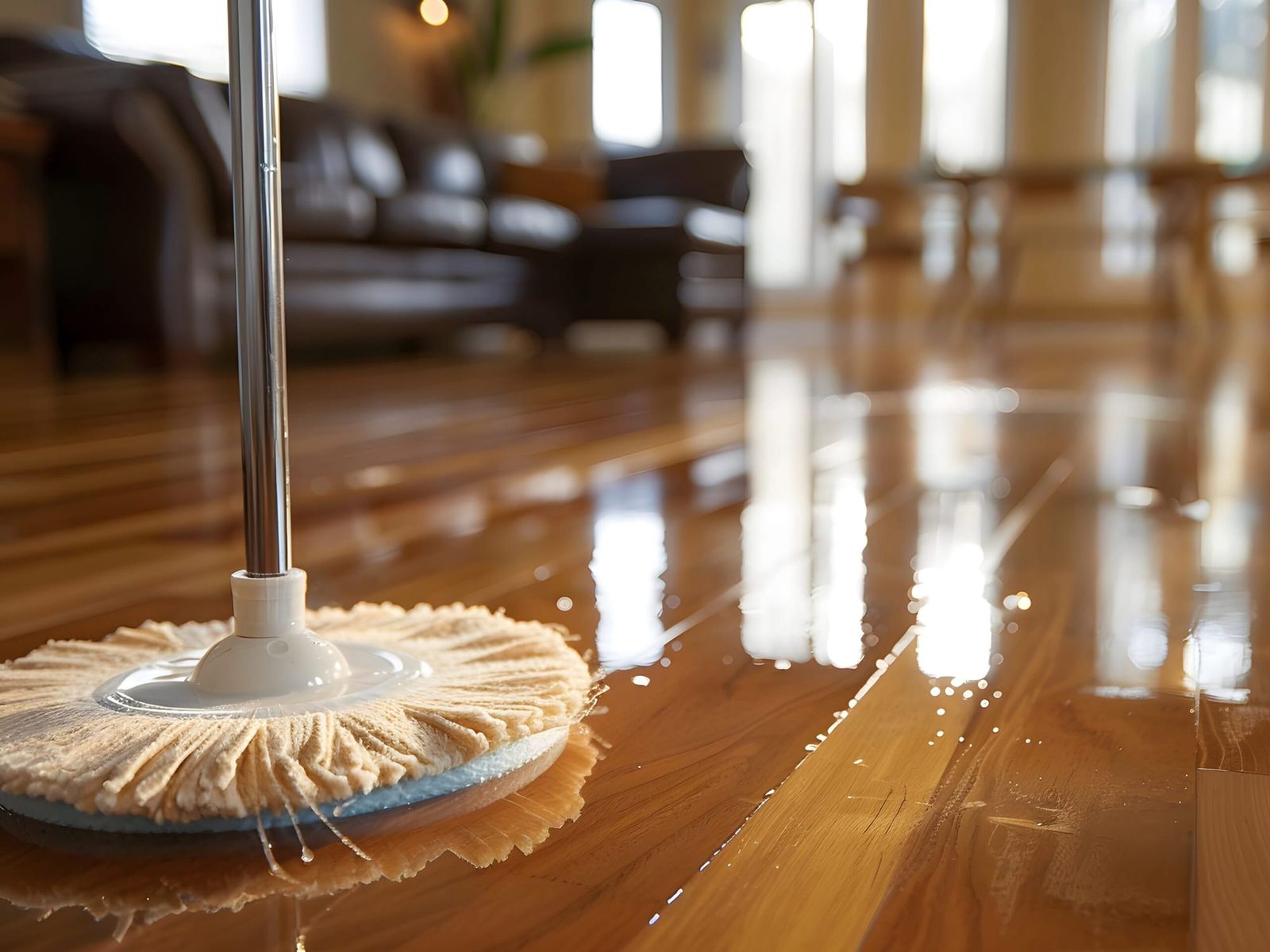
Flat microfibre mop
Uses far less water than a string mop and leaves fewer streaks.
Laminate floor cleaner
pH-neutral and labelled safe for laminate or floating floors.
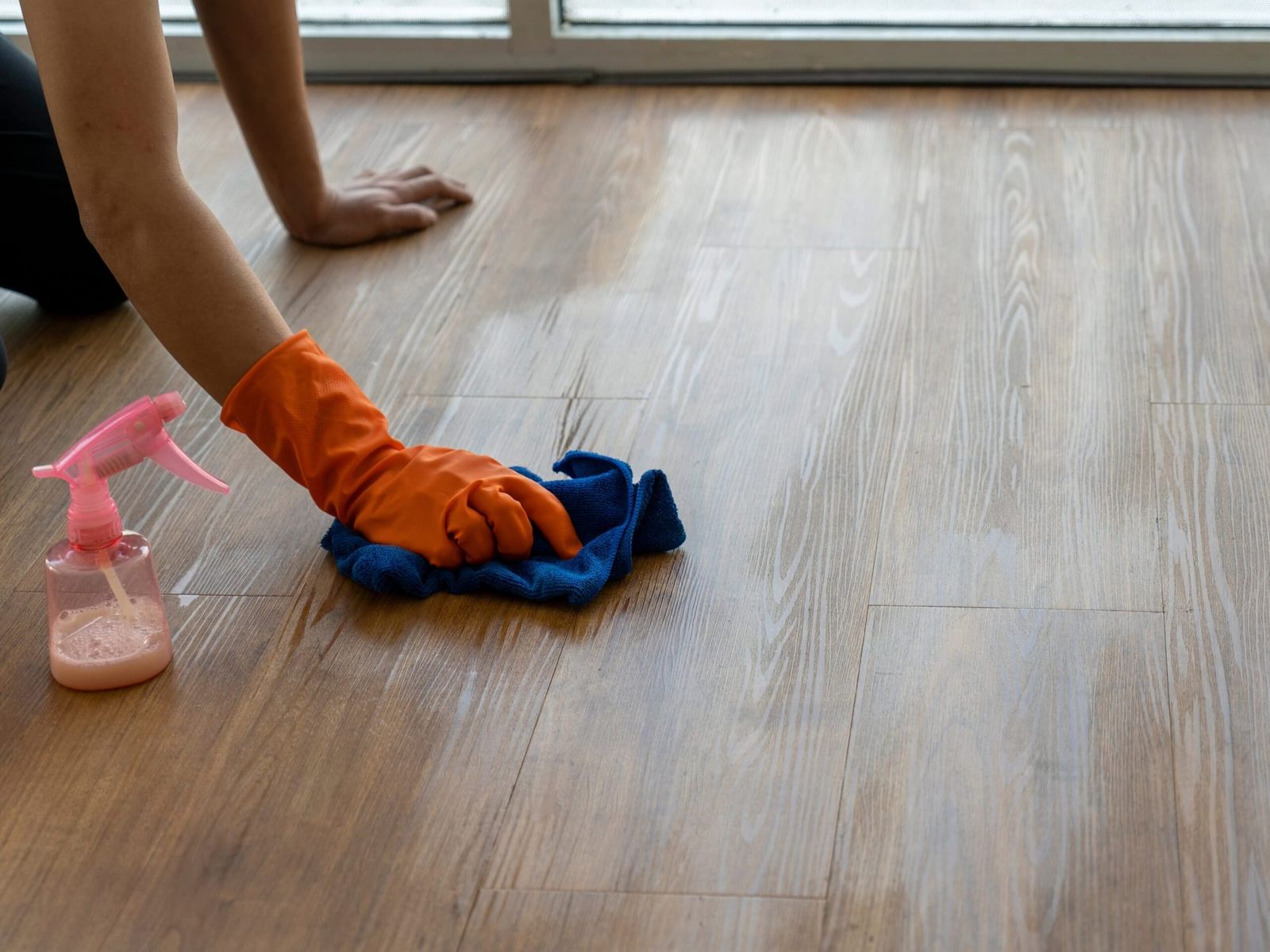
Spray bottle
Lets you mist a small area instead of soaking the mop.
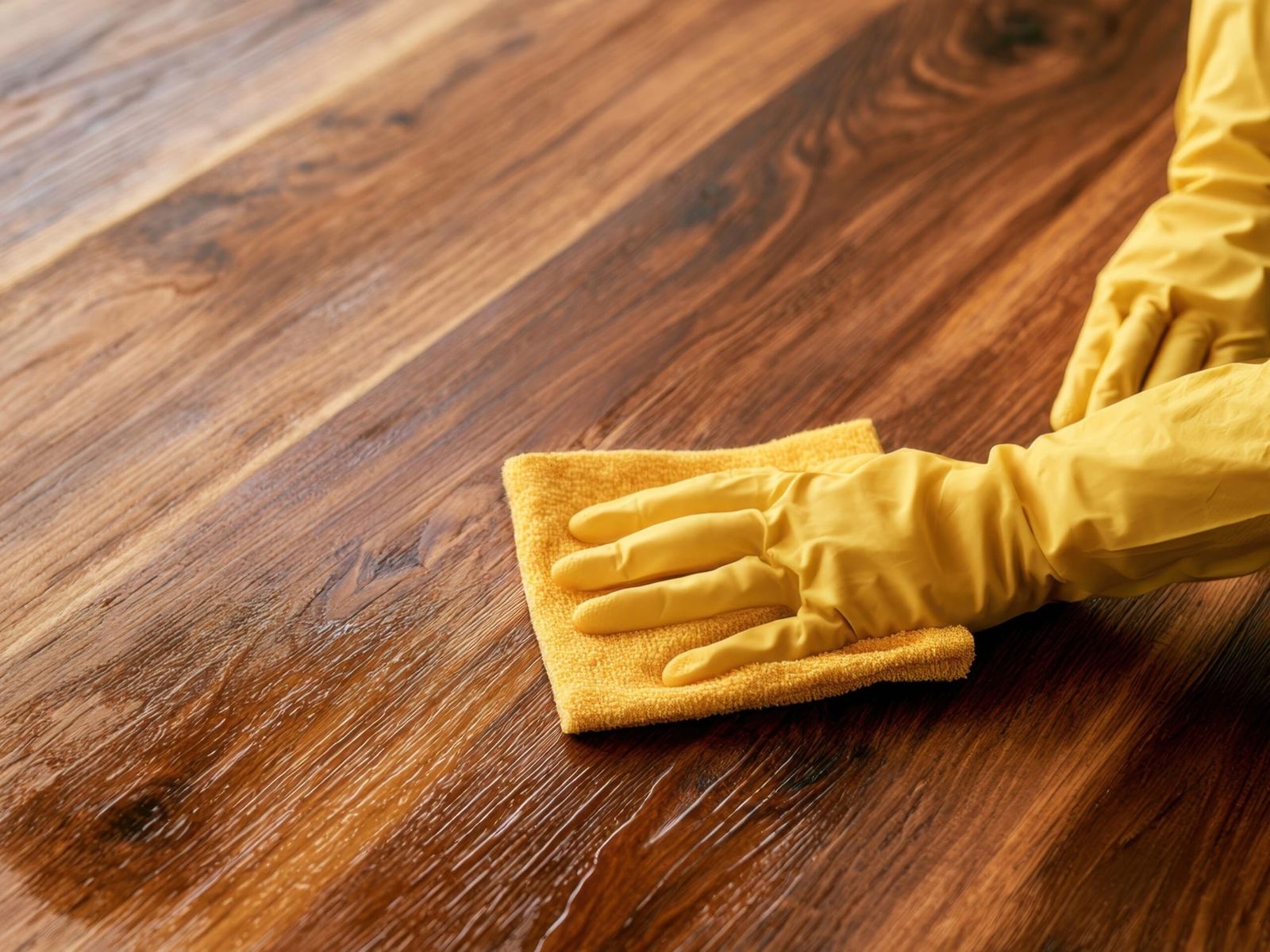
Dry microfibre cloths
For buffing streaks and catching any leftover moisture.
How to Clean Laminate Floors: Step by Step
Use this routine for a full clean. It suits most homes once a week or fortnight, and takes around 20 to 30 minutes for a typical living area.
Clear the floor
Move rugs, chairs, toys and pet bowls so you can reach the whole surface.
Remove all grit
Vacuum or dust mop thoroughly, including along skirting boards and under furniture. Grit is what scratches laminate, so this step matters most.
Prepare your cleaner
Mix your laminate cleaner exactly as the label says, usually a small capful in a bucket of water. Using more won’t clean better; it causes streaks.
Wring the mop hard
Dip the microfibre pad and wring it until it feels barely damp to touch. If it drips, it’s too wet.
Mop along the boards
Work in small sections, moving with the length of the planks so you don’t push dirt into the joins.
Rinse the pad often
Change to a fresh pad once the current one turns grey. A dirty pad spreads grime and leaves a film.
Buff and dry
Run a dry microfibre cloth over any damp patches, then keep foot traffic off until the floor is fully dry.
How Often Should You Clean Laminate Floors?
- Daily: Quick sweep or vacuum of entries, kitchens and pet areas.
- Weekly: Vacuum the whole floor and dry mop with microfibre.
- Fortnightly to monthly: Damp clean with laminate cleaner. Quick-Step suggests once or twice a month.
- As needed: Spot clean spills and marks the moment they happen.
Busy homes with kids, pets or beach sand may need a damp clean weekly. Quieter homes often only need it monthly. Damp cleaning more often than necessary doesn’t make the floor cleaner; it just adds risk and builds up residue.
How to Clean Quick‑Step Laminate Floors
Follow the care guide for your exact range
Quick-Step is one of the most installed laminate brands in Australia, and its care advice depends on the range you have. Many current Quick-Step ranges use HydroSeal, a water-repellent treatment on the plank edges, while older or entry ranges don’t.
Classic and Eligna
More sensitive to moisture. Steam mops are not permitted, and spills should be wiped up quickly, within about 12 hours at most.
HydroSeal ranges (such as Impressive and Majestic)
Water-resistant surface suitable for kitchens and hallways. Damp mopping is fine, and spills should be removed within about 24 hours. Steam on a low setting with a cloth over the jets is permitted on some ranges, but Quick-Step doesn’t recommend it.
Quick-Step recommends its own Quick-Step Clean, diluted at about one capful in half a bucket of water, or one teaspoon in the Quick-Step spray mop tank. Warranty timeframes for spills differ by product, so check the warranty for your exact range before relying on them.
Choosing new laminate? Explore our Quick-Step flooring range and laminate flooring installation in Brisbane.
How to Clean Laminate Floors Without Streaks
Streaks are the most common complaint we hear. The good news is that they’re almost always easy to fix once you know the cause.
| Problem | Likely cause | Fix |
|---|---|---|
| Cloudy streaks after mopping | Too much cleaner or soap residue | Go over the area once more using only warm water on a clean pad, then dry it |
| Dull, hazy finish | Build-up from “shine” products or oil soaps | Clean with a laminate-specific cleaner to strip the film, then use less product |
| Footprints showing quickly | Residue left on the surface attracts dirt | Rinse with clean water and switch to a residue-free cleaner |
| Swirl marks | Dirty or overused mop pad | Rinse pads frequently and finish with a dry microfibre cloth |
| Water spots | Hard tap water drying on the surface | Buff dry after mopping, or use filtered water |
Can You Use Vinegar or a Steam Mop on Laminate?
Vinegar: use with caution
Some cleaning brands recommend a weak vinegar mix, but most laminate manufacturers prefer pH-neutral cleaners. If you use it at all, keep it very weak and occasional, and check your warranty first.
Steam mops: usually no
Steam drives hot moisture straight into the board edges, which laminate handles worst of all. Most manufacturers prohibit it, and only some water-resistant ranges allow low steam with a cloth cover.
Wax, polish and oil soap: avoid
Laminate is sealed and never needs polishing. These products leave a slippery, dull film that’s hard to remove.
Robot vacuums and mops: okay with care
Great for daily grit. Set robot mops to the lowest water flow and use only a laminate-safe cleaner.
How to Remove Common Stains From Laminate
| Stain or mark | How to remove it |
|---|---|
| Shoe scuffs | Buff lightly using a clean tennis ball or dry cloth |
| Coffee, tea, wine or juice | Blot immediately, then follow with a lightly dampened cloth and laminate cleaner |
| Grease or cooking oil | Wipe with diluted laminate cleaner, then buff dry |
| Crayon, marker or ink | Use a little isopropyl alcohol on a soft cloth, then wipe with water |
| Chewing gum or candle wax | Harden with ice in a plastic bag, then lift gently with a plastic card |
| Nail polish | Dab with a small amount of acetone-based remover on a cloth, testing a hidden spot first |
| Pet accidents | Clean up promptly, wipe with laminate cleaner, then dry thoroughly |
Never use steel wool, scourers or harsh solvents on laminate. Always test a hidden area first.
How to Clean Laminate Floors That Are Very Dirty
If your floor hasn’t been cleaned properly for a while, or it’s been through a renovation, a deeper clean brings it back. First, vacuum twice, once along the boards and once across them, to lift ground-in grit. Next, clean in small sections with laminate cleaner and a fresh pad for every few square metres. Then follow with a plain-water rinse pass to remove the loosened residue, and finally buff the floor dry. Repeat in heavily soiled areas such as doorways and kitchen work zones.
Mistakes That Damage Laminate Floors
- Pouring water directly on the floor or using a dripping string mop.
- Using a steam mop on a laminate that doesn’t allow it.
- Applying wax, polish, oil soap or “mop and shine” products.
- Scrubbing with abrasive pads, powders or stiff brushes.
- Dragging furniture instead of lifting it.
- Leaving wet bath mats, pot plants or pet water bowls sitting on the floor.
- Ignoring small leaks from fridges, dishwashers or washing machines.
Caring for Laminate in Brisbane Homes
Humid summers
Laminate naturally expands in humidity. Keep rooms ventilated and avoid damp cleaning on very humid days.
Beach sand and grit
Sand acts like sandpaper. Use doormats inside and out, and dry clean entries often.
Storm season
Let muddy footprints dry, vacuum them up, then damp clean, rather than spreading wet mud.
Strong sun
Draw the blinds during peak afternoon sun so boards near big windows don’t fade unevenly.
How to Protect Laminate Between Cleans
- Put felt pads under chair and table legs and renew them as they wear.
- Use castor cups or a chair mat under office chairs.
- Place mats at external doors and in front of the kitchen sink.
- Keep pets’ nails trimmed to reduce fine scratches.
- Lift heavy furniture and appliances when moving them.
Have other floors in your home too? See our guides on how to clean vinyl flooring and how to clean timber floors.
How to Clean Laminate Floors: FAQs
How do you clean laminate floors properly?
Dry clean first with a vacuum or microfibre dust mop, then use a well-wrung microfibre mop with a pH-neutral laminate cleaner, working along the boards, and dry any remaining moisture.
What is the best cleaner for laminate floors in Australia?
A pH-neutral cleaner labelled safe for laminate or floating floors. If you have Quick-Step, the brand recommends its own Quick-Step Clean.
How do you clean laminate floors without streaks?
Use less cleaner, rinse your mop pad often, mop along the boards and buff the floor dry afterwards. If streaks remain, repeat the pass using only clean warm water.
Is it safe to steam mop laminate floors?
Usually not. Steam pushes heat and moisture into the joins and can make boards swell. Only some water-resistant ranges permit low steam with a cloth cover, so check your warranty first.
Is vinegar safe for laminate floors?
Some cleaning brands suggest a weak vinegar mix, but most laminate manufacturers recommend pH-neutral cleaners instead. If you use vinegar, keep it very diluted and occasional.
How often should you mop laminate floors?
For most households, damp mopping every two to four weeks is plenty, with regular dry cleaning in between. Busy homes may need a weekly damp clean.
Why do my laminate floors look dull?
Dullness is usually caused by residue from too much cleaner, oil soaps or shine products. A clean with a laminate-specific cleaner followed by a plain-water rinse usually restores the finish.
Can water damage laminate flooring?
Yes. Water that seeps into the joins can make the fibreboard core swell, causing lifted or peaked edges. Wipe spills quickly and avoid wet mopping.
Keep Your Laminate Looking New for Longer
Cleaning laminate floors properly comes down to three habits: remove grit often, use as little water as possible, and stick to a laminate-safe cleaner. Do that, and a quality laminate floor will stay streak-free and good-looking for many years.
If your floor is already swollen, worn or past its best, we can help. At LKV Flooring, we supply and install Quick-Step laminate, hybrid and timber floors across Brisbane from our Newstead showroom, and our team is always ready to recommend the right floor and care routine for your home.