Care & repairs
How to Clean Hardwood Floors: Step-by-Step Guide for Brisbane Homes
 Roman Miller9 min read
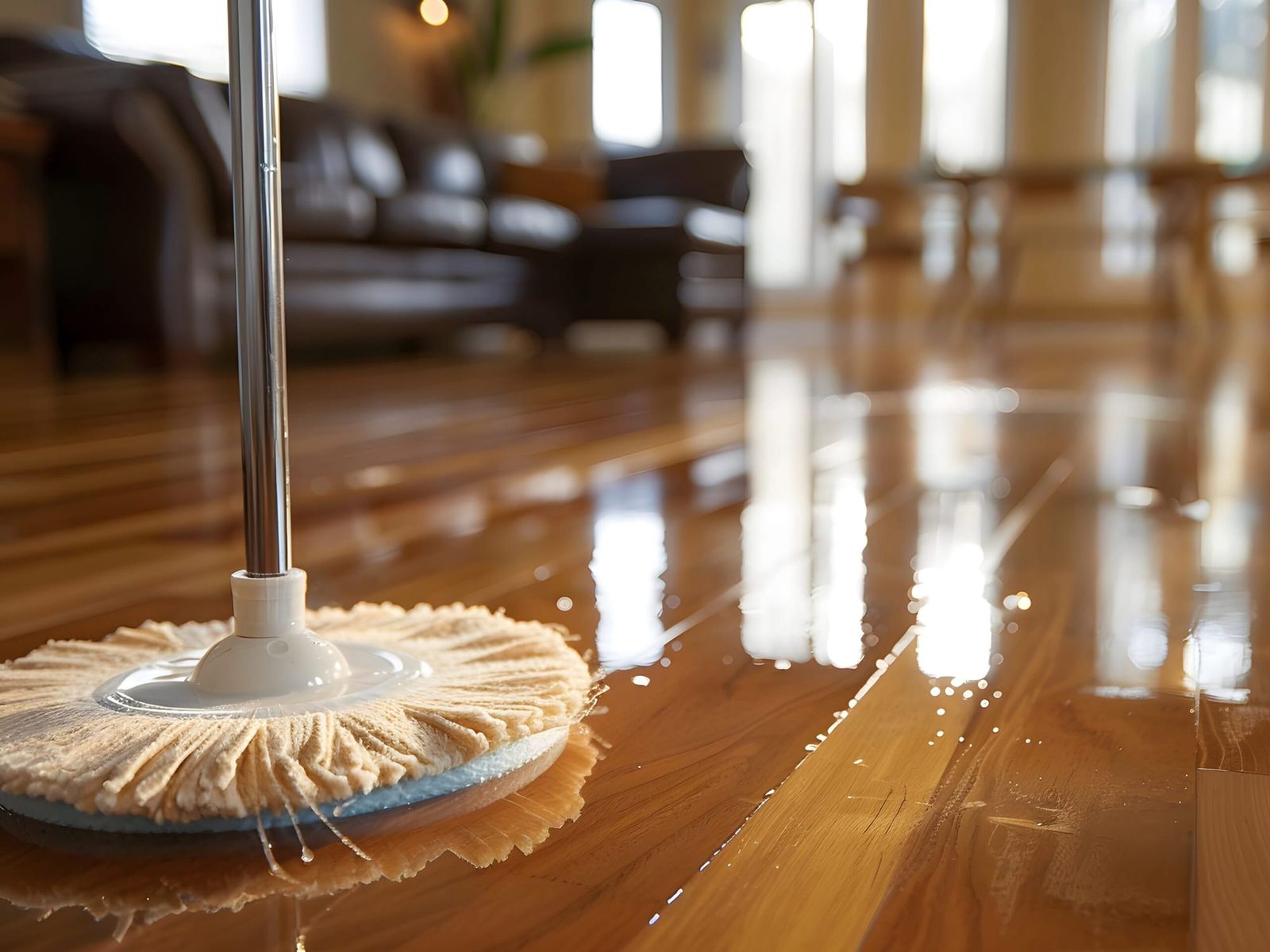
Hardwood floors are one of the best investments you can make in a home, and keeping them clean takes less effort than most people think. The trick is using the right tools, very little water, and a routine that suits how your household actually lives.
This step-by-step guide shows you how to clean hardwood floors properly, from everyday dusting to deep cleaning and removing tricky marks. The LKV Flooring team wrote it for Brisbane homes, where humidity, summer storms, and sandy feet bring their own challenges.
Quick answer
Here is how to clean hardwood floors safely: start by lifting loose dirt with a dust mop, a soft-bristle broom, or a vacuum with the beater bar switched off. Then lightly mist a pH-neutral hardwood floor cleaner onto a microfibre flat mop and clean along the direction of the boards. Use as little liquid as possible, dry any damp patches straight away, and never use steam, vinegar or wax on a lacquered floor.
- Daily: Dry clean to lift grit before it scratches
- Weekly: Light damp clean with a pH-neutral product
- Seasonal: Deep clean, then check the finish
What You Need to Clean Hardwood Floors
You don’t need a cupboard full of products. A small, well-chosen kit does a better job and is far kinder to the finish.
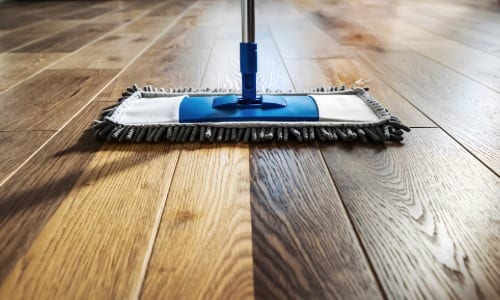
Microfibre flat mop
Washable pads trap fine dust and spread cleaner thinly. Keep at least two pads so you can swap to a fresh one mid-clean.
Hard‑floor vacuum
A vacuum with a soft brush head or the beater bar turned off pulls grit out of joins without scuffing the surface.
Hardwood cleaner
A pH-neutral cleaner made for coated timber floors, used in a spray bottle or a refillable spray mop.
Soft cloths
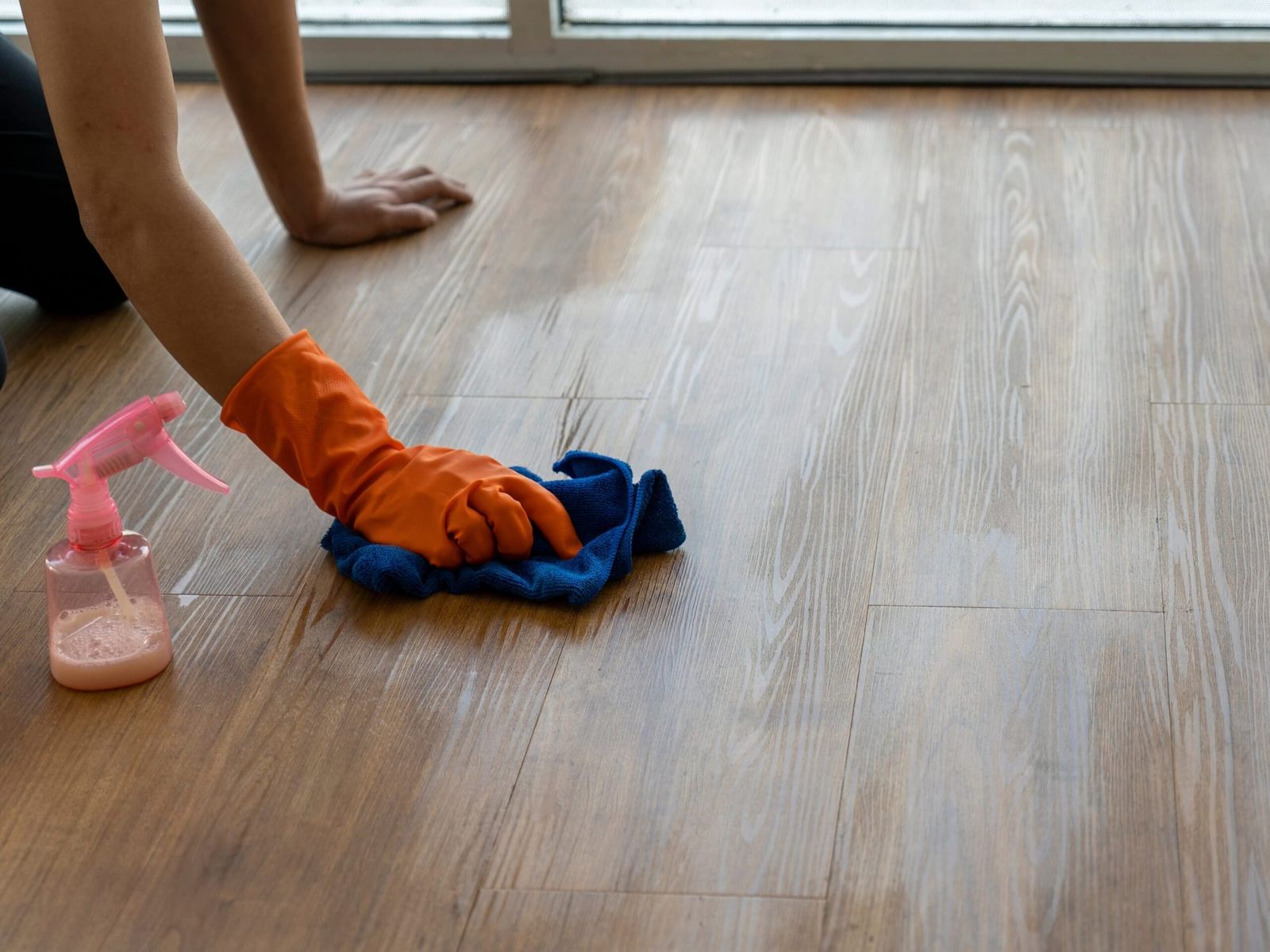
Dry microfibre cloths for buffing damp spots and handling spills as soon as they happen.
Plastic scraper
A blunt plastic card for lifting gum, wax or dried food without gouging the timber.
Mats and felt pads
Entry mats and furniture pads are the cheapest way to cut cleaning time.
How to Clean Hardwood Floors: Step by Step
Follow these steps to clean hardwood floors the right way each week. In most homes, it takes 20 to 30 minutes and leaves the floor clean, streak-free, and dry within minutes.
- Clear the floor. Pick up rugs, toys and pet bowls, and tuck chair legs under the table so you can reach every corner.
- Dry clean first. Dust mop or vacuum the whole floor, including along skirting boards and under furniture where grit collects.
- Work in sections. Divide large rooms into areas of about two metres by two metres so the cleaner never sits on the floor for long.
- Mist, don’t pour. Spray a fine mist of hardwood cleaner onto the mop pad or just ahead of the mop. You want a film that disappears in seconds, not visible liquid.
- Mop with the grain. Push the mop along the boards in overlapping passes. This lifts dirt out of the bevels and avoids streaks.
- Change pads as needed. When a pad looks grey, swap it for a clean one to remove dirt rather than move it around.
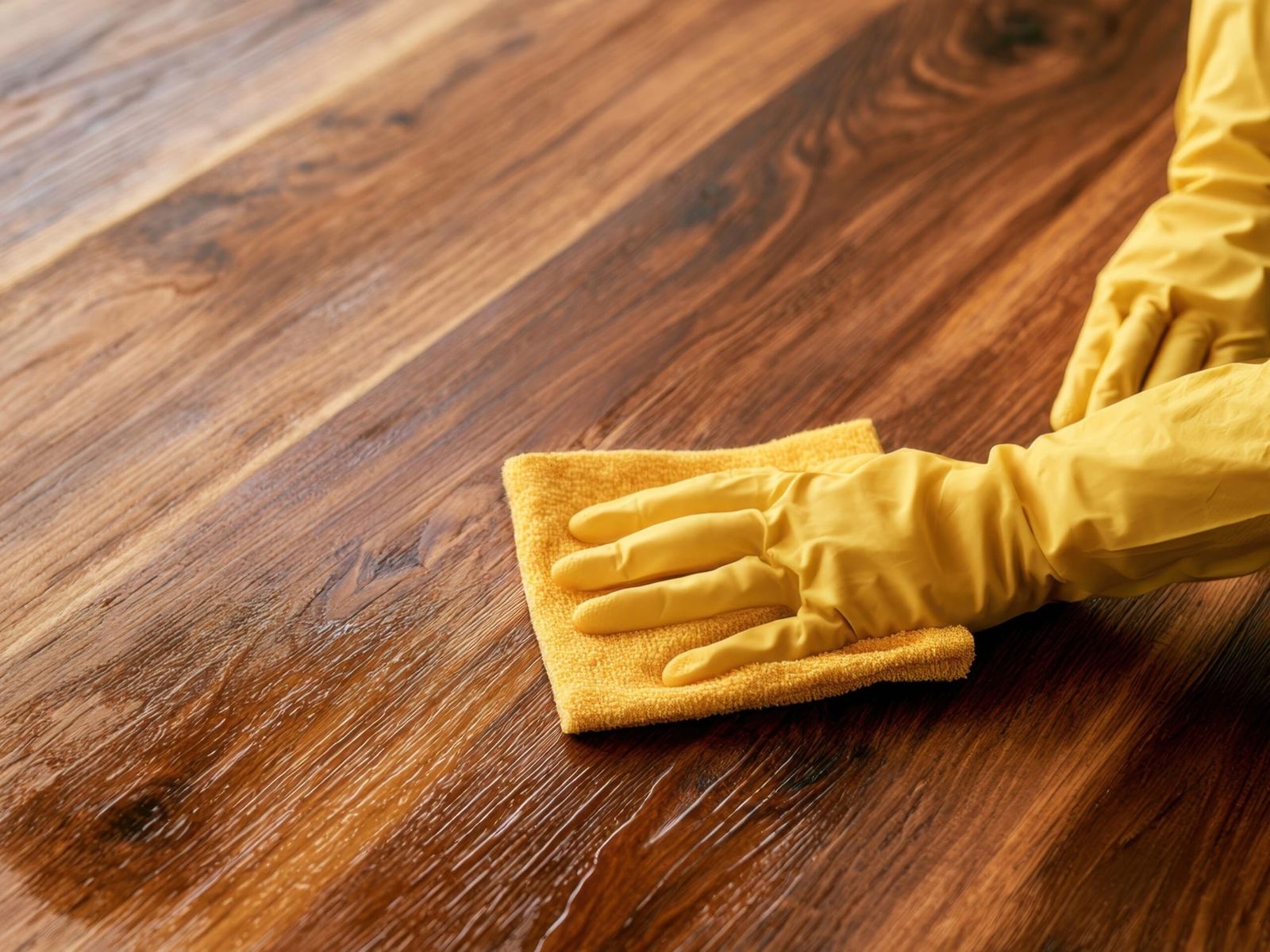
- Buff any damp areas. Run a dry cloth over spots that stay wet, especially near the kitchen sink and entrances.
- Let it dry before walking on it. A properly cleaned floor should be dry to the touch within a couple of minutes.
A simple test for too much water
If you can still see liquid on the boards 30 seconds after mopping, you’re using too much. Wring the pad harder or use fewer sprays, because standing moisture is what swells board edges over time.
How to Clean Hardwood Floors: Solid vs Engineered
The good news is that the same routine works for both. Solid hardwood and engineered hardwood both have a real timber surface, so the method that suits one suits the other.
The main difference is how much timber you have to work with if the surface is ever damaged. A solid board can be sanded back many times, while an engineered board has a thinner top layer of hardwood. That makes gentle, low-moisture cleaning and good scratch prevention even more important on engineered floors, especially on apartment slabs where boards are glued down and harder to replace.
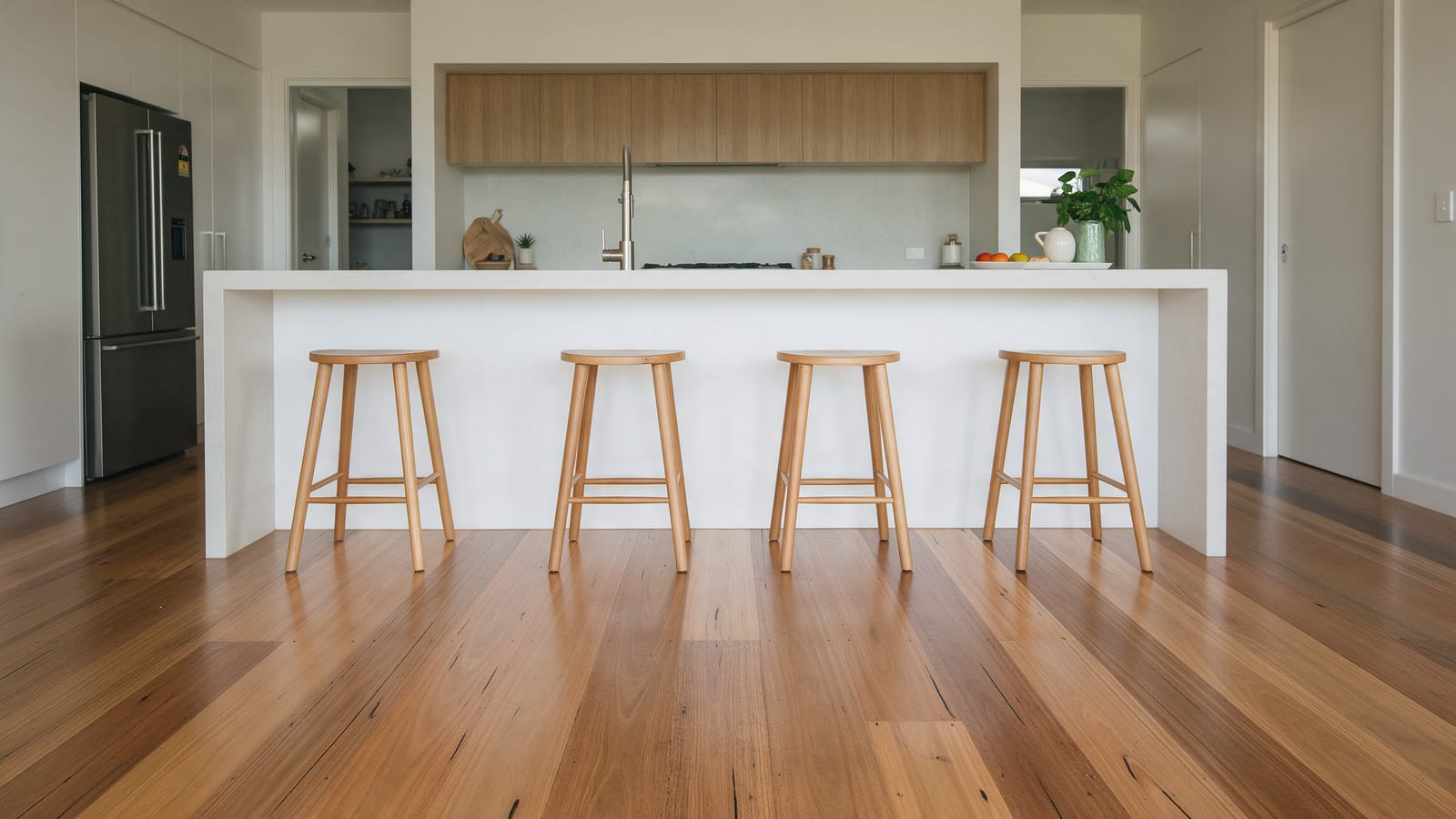
Dense Australian species such as Spotted Gum and Ironbark shrug off everyday wear, while softer European oak shows dents and claw marks sooner. Dark-stained floors of any species show dust and footprints quickly, so expect to dry clean them more often. Browse our Australian native flooring if you want a harder-wearing surface.
How Often Should You Clean Hardwood Floors?
| Task | Typical home | Busy home with kids or pets |
|---|---|---|
| Dry clean (sweep, dust mop or vacuum) | 2 to 3 times a week | Daily |
| Damp clean with hardwood cleaner | Every 1 to 2 weeks | Weekly, plus high-traffic spots as needed |
| Wipe entry mats and doorways | Weekly | Every few days |
| Deep clean | Every 3 to 6 months | Every 2 to 3 months |
| Replace furniture felt pads | Yearly | Every 6 months |
Adjust to your home. Rooms that open to the outdoors usually need more attention.
Match the Method to Your Floor Finish
The surface coating, not the timber species, decides which cleaning method is safe. If you’re unsure, the water drop test helps: a coated floor makes water bead up, while an oiled floor slowly darkens where the drop sits.
| Finish | How it looks and feels | Clean with | Avoid |
|---|---|---|---|
| Polyurethane or water-based coating | Smooth film with gloss, satin or matt sheen | pH-neutral hardwood cleaner | Wax, oil soaps, acrylic shine products |
| Natural or hard-wax oil | Soft, natural feel with no surface film | The oil manufacturer’s soap or cleaner | Standard cleaners that strip the oil |
| Old paste wax | Common in older Queenslanders, can feel slightly tacky | Dry methods and specialist wax products | Water-based mopping |
For a broader look at caring for each finish, including recoating, see our timber floor care guide.
Brisbane Conditions and Your Hardwood Floors
Where you live changes how you clean; South East Queensland throws a few local challenges at hardwood floors.
Wet season mould
Long humid spells can cause mould spots on floors in closed, poorly ventilated rooms. Keep air moving, run a dehumidifier during extended rain and wipe any spots with a barely damp cloth and hardwood cleaner.
Sand and grit
Trips to the beach, sandpits and outdoor entertaining bring abrasive sand inside. Dry clean more often near sliding doors, and shake out entry mats outdoors.
Storm season mud
Afternoon storms mean muddy shoes and paws. Let mud dry, then vacuum it up before damp cleaning so you don’t smear it across the boards.
Harsh sun
Strong UV fades and dries finishes. Close blinds in the hottest part of the day and rearrange rugs from time to time.
Humidity and seasonal gaps
Brisbane’s swings between humid summers and drier winters make boards move. Thin gaps that open in winter are expected, so read our article on fixing floorboard gaps before reaching for filler.
How to Remove Common Marks From Hardwood Floors
Always start with the gentlest method and test in an out-of-sight spot first. Knowing how to clean hardwood floors when something goes wrong matters as much as the weekly routine, because most lasting damage comes from marks scrubbed too hard or left too long.
| Mark | How to remove it |
|---|---|
| Muddy paw prints | Let the mud dry, vacuum it, then damp clean the area |
| Sticky spills | Soften with a cloth lightly dampened with hardwood cleaner, then wipe dry |
| Chewing gum | Harden it with an ice cube in a zip-lock bag, then lift it with a plastic scraper |
| Candle wax | Chill with ice, ease it off with a plastic card, then buff the spot |
| Crayon or marker | Use a dab of hardwood cleaner on a soft cloth and rub gently |
| Black heel marks | Rub with a clean tennis ball or a dry microfibre cloth |
| Small mould spots | Wipe with a barely damp cloth and hardwood cleaner, dry fully and improve ventilation.n |
How to Deep Clean Hardwood Floors Without Damage
A deep clean every few months removes the fine dirt daily cleaning misses and gives you a good chance to check the condition of the finish.
- Move furniture and vacuum the entire floor, including edges and corners, with a crevice tool.
- Clean the floor in small sections with fresh pads, changing them more often than usual.
- Pay extra attention to kitchen zones, entrances and around pet bowls.
- Inspect the surface. Grey, worn traffic lanes or spots where water no longer beads mean the protective coat is wearing thin.
- Replace worn felt pads and wash or replace entry mats.
If the finish is worn through, cleaning alone won’t bring back the shine. A professional maintenance recoat restores protection before the timber itself is damaged, and our team can advise when it’s due. If you’re planning a new floor, explore our solid timber flooring and engineered timber ranges.
Products That Damage Hardwood Floors
- Steam mops, which drive hot moisture into joints and weaken finishes.
- Vinegar, ammonia and bleach, which slowly etch and dull coatings.
- “Mop and shine” acrylic products, which build up a cloudy layer that has to be stripped before any recoat.
- Oil soaps and furniture polish on coated floors, which leave a slippery residue.
- Abrasive scourers and stiff-bristled brushes.
Mistakes to Avoid When Cleaning Hardwood Floors: Cleaning with damp cloths
- Damp cleaning before removing grit, which turns dirt into sandpaper.
- Using a bucket and string mop that leaves too much water behind.
- Cleaning in long strokes across the boards instead of along them.
- Leaving spills to dry, especially near the dishwasher and fridge.
- Assuming a dull floor needs more product. Usually it needs less, or a recoat.
Frequently Asked Questions
What is the best way to clean hardwood floors?
Dry clean first with a dust mop or a vacuum that has the beater bar off, then use a microfibre flat mop lightly misted with a pH-neutral hardwood cleaner, working along the boards.
What do professionals use to clean hardwood floors?
Most flooring professionals use microfibre flat mops, a soft vacuum head and a pH-neutral cleaner designed for coated timber floors. Oiled floors are cleaned with the oil manufacturer’s own soap.
Is vinegar safe for hardwood floors?
It isn’t recommended. Vinegar is acidic, and over time it can dull and etch the protective coating. A pH-neutral hardwood cleaner cleans just as well without the risk.
How do I make my hardwood floors shine again?
First clean off any build-up with a pH-neutral cleaner. If the floor still looks dull, the coating is likely worn, and a professional maintenance recoat will bring back the sheen. Avoid shine-in-a-bottle products, which cloud over time.
Can I vacuum hardwood floors?
Yes. Use a hard-floor head or soft brush attachment and switch off any spinning beater bar, which can scratch the surface.
Can I use a spray mop on hardwood floors?
Yes, as long as the cleaning solution is a pH-neutral hardwood cleaner and you use only a light mist. Spray mops are one of the easiest ways to control how much liquid goes on the floor.
How do I clean old hardwood floors?
Find out the finish first. Older floors may be waxed or have a worn coating, so start with dry cleaning and a very lightly damp cloth on a small area. Heavily worn or waxed floors usually benefit from professional advice before regular damp cleaning.
How do I stop mould on timber floors in Brisbane?
Keep rooms ventilated, use a dehumidifier in long wet spells and avoid leaving rugs or furniture covering damp areas. Wipe early spots with a barely damp cloth and hardwood cleaner, then dry thoroughly.
Need Help With Your Hardwood Floor?
If your floor looks tired even after cleaning, the finish may need a refresh. Talk to LKV about recoating, repairs or a new hardwood floor installation. Phone (07) 3890 5173 or visit the Newstead showroom.