Installation
Acoustic Underlay for Apartments: Ratings, Types and Testing Explained
 Roman Miller9 min read

Swapping carpet for timber, hybrid or laminate is one of the best upgrades you can make to an apartment. But in a building where someone lives directly below you, there’s one step you can’t skip: acoustic underlay.
Hard floors carry the sound of footsteps, dropped keys and chair legs straight through the concrete slab. Acoustic underlay is what stops that noise reaching your neighbours, and in most apartment buildings it’s also what gets your new floor approved. In this guide, the LKV Flooring team in Newstead, Brisbane, explains what acoustic underlay is, the ratings your body corporate will ask for, which underlay suits each type of floor, and how an acoustic test works from start to finish.
Quick answer
Acoustic underlay is a resilient layer installed under hard flooring to reduce impact noise travelling into the apartment below. In Australian apartments, floors between units must meet the National Construction Code minimum for impact sound, and many body corporates set a higher standard in their by-laws. Before replacing carpet with a hard floor, check your by-laws, choose a flooring and underlay system with test data, and be prepared for an on-site acoustic test.
What Is Acoustic Underlay?
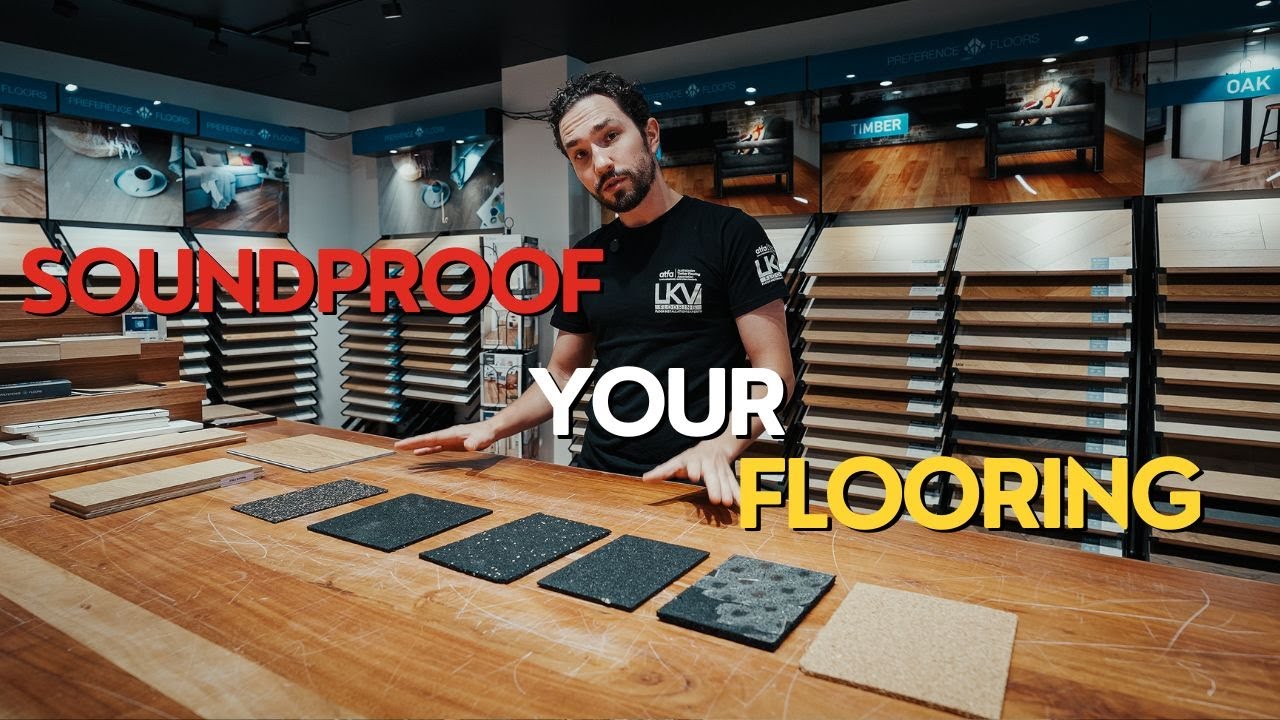
Acoustic underlay is a specialised layer, usually rubber, foam or cork, laid between the concrete slab and your new floor. Its job is to absorb vibration before it reaches the slab, so less sound passes into the ceiling of the apartment below.
It mainly targets impact noise: footsteps, dropped objects, furniture being dragged and kids playing. This is different from airborne noise, such as voices or a television, which travels through the air and is mostly handled by the slab and ceiling themselves.
Carpet underlay is not acoustic underlay
Carpet underlay is designed for softness and comfort underfoot. Acoustic underlay is engineered and tested for sound reduction under hard floors. Reusing old carpet underlay under a new hard floor won’t meet acoustic requirements and can damage floating floor joints.
How the layers work together
Your new floor Hybrid, laminate or engineered timber
Acoustic underlay Absorbs impact before it reaches the slab
Concrete slab The ceiling of the apartment below
Why Apartments Need Acoustic Underlay
There are two layers of rules to think about: the national building code, and your own building’s by-laws.
- 62: NCC maximum impact sound rating for floors between apartments
- 1 to 6: AAAC star scale used to grade acoustic comfort between dwellings
- 5 star+: Level recommended for good to excellent comfort in apartments
Sources: National Construction Code Part F7 and the Association of Australasian Acoustical Consultants (AAAC) star rating guideline. For impact ratings, a lower number means a quieter floor.
The National Construction Code
The NCC sets the minimum impact sound performance for floors separating apartments. It’s a baseline, and acoustic consultants generally agree it doesn’t deliver a high level of comfort, which is why many buildings ask for more.
Your body corporate by‑laws
In Queensland, most apartment buildings are run by a body corporate with by-laws covering flooring changes. These commonly require written approval before carpet is replaced with a hard floor, a minimum acoustic rating, and evidence that the floor meets it, often an acoustic test report from a qualified engineer.
Check before you buy
Ask your body corporate for the flooring by-law and the exact rating required before you choose a floor. If a neighbour in your building has already passed a test with the same flooring and underlay, you may be able to use their result instead of testing your own.
Acoustic Ratings Explained
Acoustic reports and by-laws use a few different terms. Here’s what each one means in plain English.
| Rating | What it measures | Better result |
|---|---|---|
| Ln,w | Impact sound measured in a laboratory | Lower number |
| L’nT,w | Impact sound measured on site in a real building | Lower number |
| FIIC | Field impact insulation class, often used in by-laws | Higher number |
| AAAC stars | Overall acoustic comfort grade from 1 to 6 stars | More stars |
Ratings aren’t interchangeable, so match your test report to the exact rating your by-law asks for.
Types of Acoustic Underlay
Acoustic underlays commonly come in thicknesses of around 2 to 5mm. The right one depends on your floor, your slab and the rating you need to achieve.
| Underlay type | Strengths | Best suited to |
|---|---|---|
| Rubber | Dense, durable and very effective for impact noise | Hybrid, laminate and engineered timber in apartments |
| Acoustic foam | Lightweight, affordable and easy to lay | Laminate and floating floors with lower requirements |
| Cork | Natural material with good sound dampening | Floating timber floors and eco-conscious projects |
| Attached backing | Pre-fixed to the plank, so no separate layer | Hybrid planks with their own acoustic test data |
| Glue-down acoustic mat | Bonded system for direct-stick floors | Glue-down engineered timber |
Thicker isn’t always better
Under a floating floor, an underlay that is too soft or too thick lets the planks flex, which can weaken the click joints and void the warranty. Always use an underlay the flooring manufacturer approves, and never add a second underlay under a plank that already has one attached unless the manufacturer allows it.
Choosing Underlay for Your Type of Floor
Hybrid flooring
Many hybrid planks come with an acoustic backing attached. Look for products with published test results on a concrete slab. Explore hybrid flooring installation.
Laminate flooring
Laminate can sound hollow and clicky on a slab, so a quality acoustic underlay matters for both compliance and how the floor feels. See laminate flooring installation.
Floating engineered timber
Laid over a separate acoustic underlay approved by the manufacturer. Gives the warmth of real timber with a straightforward installation.
Glue‑down engineered timber
Uses a bonded acoustic mat system. The slab usually needs professional grinding so the adhesive bonds properly. Learn about engineered timber installation.
Whichever floor you choose, the result depends on the whole system working together: the slab, the underlay, the flooring and the way it’s installed. Two apartments with the same floorboards can test very differently if the slab thickness, ceiling below or underlay is different. That’s why the most reliable path is choosing a system with proven test results in similar buildings, then having it installed by a team that follows the manufacturer’s acoustic specifications exactly.
How an Acoustic Test Works, Step by Step
In the video above, the LKV team prepares an apartment for a sound engineer’s test. Here’s the process most Brisbane apartment owners can expect.
- Get body corporate approval. Confirm the required rating and whether a test is needed before any work begins.
- Remove carpet and underlay. The old carpet and its soft underlay come up to expose the slab.
- Prepare the slab. Plaster, nails, gripper strips and debris are cleared. Glue-down floors also need the slab ground.
- Lay a test sample. A sample of around 1 to 1.2 square metres, with the exact underlay and flooring you plan to use, is laid in the middle of the room, usually at least a metre from the walls.
- Run the tapping machine. The acoustic engineer places a standard machine on the sample. It strikes the floor with small hammers at a consistent force.
- Measure from below. In the apartment underneath, the engineer records how much noise comes through the ceiling.
- Receive the report. If the result meets the by-law, the report goes to the body corporate and the full installation can go ahead.
Why the sample matters
The test only proves the exact combination that was tested. If you change the flooring, underlay or adhesive afterwards, the result may no longer apply, so lock in your products before booking the engineer.
Can You Use Acoustic Underlay in a Bathroom?
Bathrooms and other wet areas are different. They need a compliant waterproofing system, and floating floors with a standard acoustic underlay are generally not suited to them. Where a bathroom floor needs acoustic treatment, it’s usually done with an acoustic mat system designed for tiles, installed as part of the waterproofing and tiling build-up. Always check your body corporate by-laws and use a system tested for wet areas.
What Happens If You Skip Acoustic Underlay?
Installing a hard floor without the right underlay, or without body corporate approval, is one of the most common causes of neighbour disputes in apartment buildings. Footsteps that were barely noticeable on carpet can sound like knocking on the ceiling below once a hard floor goes down.
If a complaint is made and the floor doesn’t meet the by-law, the body corporate can ask the owner to fix it. In the worst case, that can mean lifting a brand-new floor, adding a compliant underlay and reinstalling, or replacing the floor entirely. Getting it right the first time is far cheaper than fixing it later.
Good for your neighbours, good for your property
A quiet, compliant floor protects your relationship with the people below and gives future buyers confidence that the renovation was done properly. Keep your approval letter and acoustic report with your property records.
Questions to Ask Your Flooring Installer
Before you commit to a floor for your apartment, these questions will tell you whether your installer understands acoustic compliance.
- Does this flooring and underlay system have acoustic test data on a concrete slab? Ask to see the report, not just a marketing claim.
- Which rating does the report use? It needs to match the rating in your by-law, whether that’s Ln,w, L’nT,w or FIIC.
- Is the underlay approved by the flooring manufacturer? An unapproved combination can void the product warranty.
- Can you prepare a test sample if one is needed? An experienced installer can lay the sample and coordinate with the acoustic engineer.
- What slab preparation is included? Cleaning, levelling and grinding all affect both the finish and the acoustic result.
Common Mistakes to Avoid
- Buying flooring before checking the by-laws. The floor you love may not have test data that meets your building’s rating.
- Reusing carpet underlay. It isn’t designed or tested for acoustic performance under hard floors.
- Doubling up underlay. Adding a second layer under attached-backing planks can damage joints and void warranties.
- Skipping slab preparation. Debris and high spots reduce acoustic performance and cause floors to move.
- Changing products after testing. A pass only applies to the exact system that was tested.
Frequently Asked Questions
What is acoustic underlay?
It’s a resilient layer, usually rubber, foam or cork, installed under hard flooring to reduce impact noise travelling through the slab into the room below.
Do I need acoustic underlay in my apartment?
If you’re installing a hard floor in an apartment with a unit below, almost certainly. Floors between units must meet the NCC impact sound minimum, and most body corporates require proof of compliance.
What is the best acoustic underlay for hybrid flooring?
The one the hybrid manufacturer approves, with test data on a concrete slab. Many hybrids have an acoustic backing attached, so a separate underlay may not be needed or allowed.
How thick should acoustic underlay be?
Most are around 2 to 5mm. The right thickness is the one that achieves your required rating and is approved by your flooring manufacturer, not simply the thickest available.
Can you put acoustic underlay in a bathroom?
Not a standard floating-floor underlay. Wet areas need compliant waterproofing, so acoustic treatment in bathrooms is usually an acoustic mat system designed for tiles.
Do I need an acoustic test before installing new floors?
It depends on your body corporate. Some accept manufacturer test data or a neighbour’s previous result for the same system, while others require a test in your apartment.
Does acoustic underlay work on a concrete slab?
Yes. Concrete slabs carry impact noise efficiently, which is exactly why acoustic underlay is used in apartments. The slab must be clean, flat and dry first.
Is acoustic underlay worth it in a house?
It’s not usually required, but it can make floating floors on upper levels quieter and more solid underfoot, especially in two-storey homes.
Planning New Floors in Your Apartment?
LKV Flooring helps Brisbane apartment owners choose compliant flooring and underlay, prepare for acoustic testing and install the finished floor. Visit our showroom at 77 Doggett Street, Newstead, or call (07) 3890 5173.