Choosing floors
Bevelled Edge Flooring: What It Means, Types, Pros and Cons
 Roman Miller9 min read
Two floors can use the same timber, colour and width, yet look completely different once they’re laid. Often the reason is something most people never notice in a showroom: the tiny edge where one board meets the next, and the finish sitting on top.
This guide explains bevelled edge flooring (also searched as beveled edge flooring) in plain English: what a bevelled edge is, the different edge profiles, the pros and cons compared with square-edge boards, how bevels work on laminate, hybrid and vinyl, and how to choose the right finish to go with them. Roman Miller from LKV Flooring walks through the key points in the video below.

What is a bevelled edge?
Bevelled edge (also spelt beveled edge), noun
A bevelled edge, often searched as beveled edge, is a small angled cut along the top edge of a floorboard. When two bevelled boards sit side by side, the angled edges form a shallow V-shaped groove that outlines each board. Floors without this cut are called square edge or flat edge, and the boards meet in a single flat surface.
Edge style is easy to overlook, yet it’s one of the details buyers notice most once a floor is down, because it shapes how light falls across the room. A bevel also influences cleaning, how forgiving the floor is on an imperfect slab, and how the floor will look if it’s ever sanded. Getting it right at the showroom saves second-guessing later.
Bevelled Edge Flooring Profiles Explained
Not every bevel is the same. The depth and angle of the cut change how strongly each board stands out.
Square edge
No bevel. Boards meet flat for a seamless, continuous surface, like traditional sanded timber.
Micro bevel
A very slight chamfer, sometimes called an eased edge. It softens joins without drawing attention to them.
Standard bevel
A clearly visible V-groove that defines every board and adds a rustic, plank-by-plank look.
Four‑Sided, Two‑Sided or No Bevel?
Beyond the depth of the cut, manufacturers also choose which edges get a bevel. This affects how busy or calm the floor looks across a room.
Four‑sided bevel
Most common
Every edge of the board is bevelled. It’s the usual profile for engineered European oak. It looks great along the grain, but the short ends create visible cross-joints that some people find a little busy.
Two‑sided bevel
Longer look
Only the long sides are bevelled, while the end joints stay flat. Your eye follows the length of the room without catching on the cross-joints, so the floor feels longer and calmer.
Square edge
Traditional
No bevel at all. It’s rare in pre-finished engineered boards but recreates the flat, sanded-on-site look of classic solid hardwood.
Tip on board length
If you want a high-end, less busy floor, choose longer boards, ideally close to 2 metres or more. Shorter boards mean more cross-joints, and with a deep four-sided bevel, that can make a room feel cluttered.
Why Do Floorboards Have Bevelled Edges?
Traditionally, solid timber floors had no bevels at all. Raw boards were laid, secret nailed and glued, left to acclimatise to the home, then sanded completely flat on site before the finish went on. The result was a seamless, continuous surface.
Modern pre-finished engineered boards arrive already coated, so they can’t be sanded flat after installation. A bevel solves several practical problems. First, it hides tiny height differences between neighbouring boards that would otherwise catch the light. Second, it allows the factory finish to wrap down the edge, which helps seal it. Finally, it gives the floor a defined, natural plank look.
Bevelled vs Square Edge Flooring: Pros and Cons
Bevelled edge pros
- Hides minor height differences between boards
- Factory finish wraps over the edge for extra protection
- Each board reads as a genuine plank
- Forgiving on slightly uneven subfloors
- Disguises small gaps from seasonal movement
Bevelled edge cons
- Grooves can collect dust, crumbs and pet hair
- Deep bevels can make a room look busy
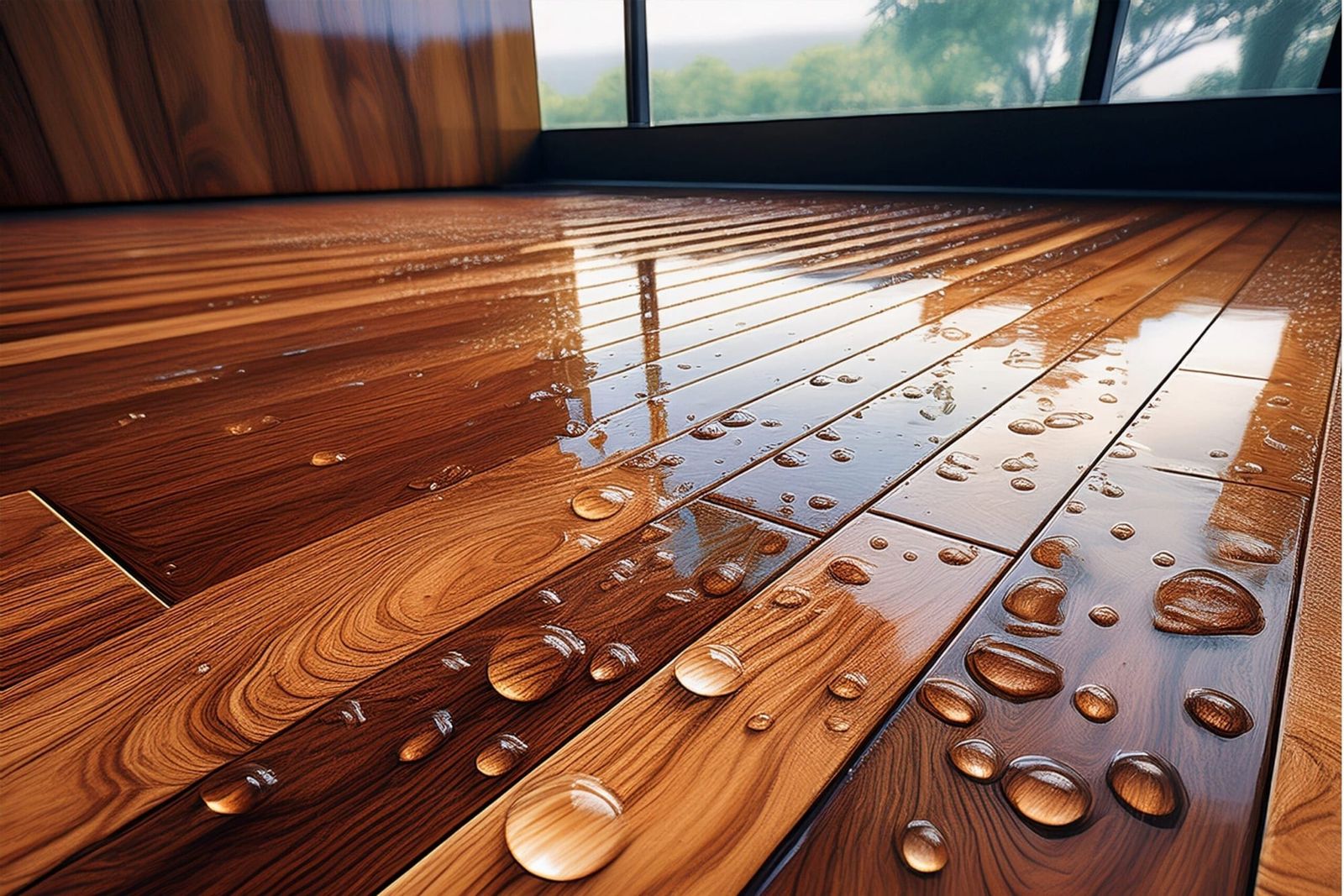
- Spills can sit in the grooves if not wiped quickly
- Bevels disappear if the floor is heavily sanded
- Less suited to a sleek, seamless modern look
| Feature | Bevelled edge | Square edge |
|---|---|---|
| Look | Defined planks, more texture | Seamless, continuous surface |
| Hides uneven boards | Yes | No, every lip shows |
| Cleaning | Grooves need extra attention | Easiest to keep clean |
| Best for | Rustic, coastal and natural styles | Minimalist and formal interiors |
| Common in | Pre-finished engineered timber, hybrid, laminate | Solid timber sanded on site |
Beveled vs Non‑Beveled Flooring: Which Suits Your Room?
The right choice often depends on the room and the look you’re after. Use this as a quick guide when comparing beveled vs non-beveled flooring:
- Open-plan living areas: a micro or two-sided bevel on long boards keeps large spaces calm and uncluttered.
- Kitchens and dining rooms: a micro bevel balances a natural look with easier cleaning, since crumbs and spills collect less in shallow grooves.
- Bedrooms and studies: a standard four-sided bevel adds warmth and character where traffic is light.
- Formal or minimalist spaces: square-edge boards give the seamless, gallery-like finish these interiors suit best.
- Older or uneven subfloors: bevelled edges are more forgiving, as they disguise small height differences between boards.
Board width matters too. Wide boards with a strong bevel create a bold, rustic rhythm, while narrow boards with deep bevels can start to look busy quickly. If you love wide planks, a micro bevel usually gives the most refined result.
Bevelled Edge Laminate, Hybrid and Vinyl Plank Flooring
Bevels aren’t just a timber feature. Many bevelled edge laminate, hybrid and vinyl plank products use them to look more like real wood. Some cut a genuine bevel into the board, while others use a painted or printed bevel, where the edge is coloured darker to mimic a groove without changing its shape.
On printed floors, a real bevel adds depth and realism, but it also creates more joins where water can sit, so wipe spills quickly. If you’re comparing beveled vs non-beveled vinyl plank or hybrid, a micro bevel is often the best balance between realism and easy cleaning. Learn more in our guides what is hybrid flooring and how to clean vinyl flooring, or explore our laminate flooring installation.
What Happens to Bevels When You Sand a Floor?
- Up to 6mm: Timber veneer on premium engineered boards
- 1 to 1.5mm: Timber typically removed by a heavy sand
- Gone: Factory bevels are sanded out, leaving a flat floor
Engineered flooring has a real timber layer over a stable core, and premium boards can carry up to 6mm, similar to the usable wear layer of solid timber. When you eventually sand and polish, a heavy sand removes roughly 1 to 1.5mm of timber. A side effect is that the factory bevels disappear completely, leaving a flat, square-edge style floor. Some homeowners actually choose this deliberately when refinishing. Our engineered timber explainer covers veneer thickness in more detail.
How to Clean Bevelled Edge Floors
Beveled edges do need a little more care than flat boards, because the grooves can trap fine dust, pet hair and crumbs. The good news is that a few simple habits keep them looking sharp.
- Vacuum along the length of the boards with a soft brush head, so the bristles reach into each groove.
- Use a microfibre mop that’s only slightly damp, as water left in the grooves can soak into board edges.
- Wipe spills straight away, especially in kitchens, before they settle into the joins.
- Avoid steam mops, which force moisture into the bevels and the joints beneath them.
Our timber floor cleaning routine covers products and frequency in full.
Choosing the Right Finish for Your Floor
Once you’ve chosen an edge style, the next decision is the protective coating. For engineered timber, the two main options are lacquer (sometimes called varnish) and oil.
Lacquer finishes: the five popular sheens
Lacquer sits on top of the timber and forms a hard, protective film. It’s durable and needs very little ongoing maintenance.
High gloss (most reflective)
Shiny and mirror-like, but shows footprints, dust and pet scratches, so it suits low-traffic rooms.
Satin (moderate shine)
A classic semi-gloss with a smooth surface and a gentle sheen.
Smooth matt (low sheen)
A popular water-based look that reflects little light and hides marks better than gloss.
Brushed matt (textured)
Lightly brushed grain with a tactile feel, very good at hiding everyday wear.
Rustic matt (heavily textured)
Deep brushing highlights knots and grain for a natural, rugged surface.
Oil finish (penetrating)
Soaks into the grain for a rich, natural feel, but needs re-oiling every 2 to 5 years.
Oil finishes look beautiful and feel natural underfoot, which is why many designers love them. However, oil gradually wears away, so it’s less suited to busy, low-maintenance households. Lacquer, especially brushed matt, is the practical choice for most Brisbane families. Whichever finish you choose, pair it with an edge style that suits how you live. Deep bevels with a rustic oiled finish look stunning in a relaxed coastal home, while a calm matt lacquer on long two-sided bevelled boards suits a busy family space.
Popular bevel and finish pairings
- Modern and calm: Two-sided bevel, long boards, smooth matt finish
- Family-friendly: Four-sided micro bevel, brushed matt finish
- Rustic character: Four-sided standard bevel, rustic matt or oil
- Classic seamless: Square edge solid timber, sanded and coated on site
See Bevels and Finishes in Person
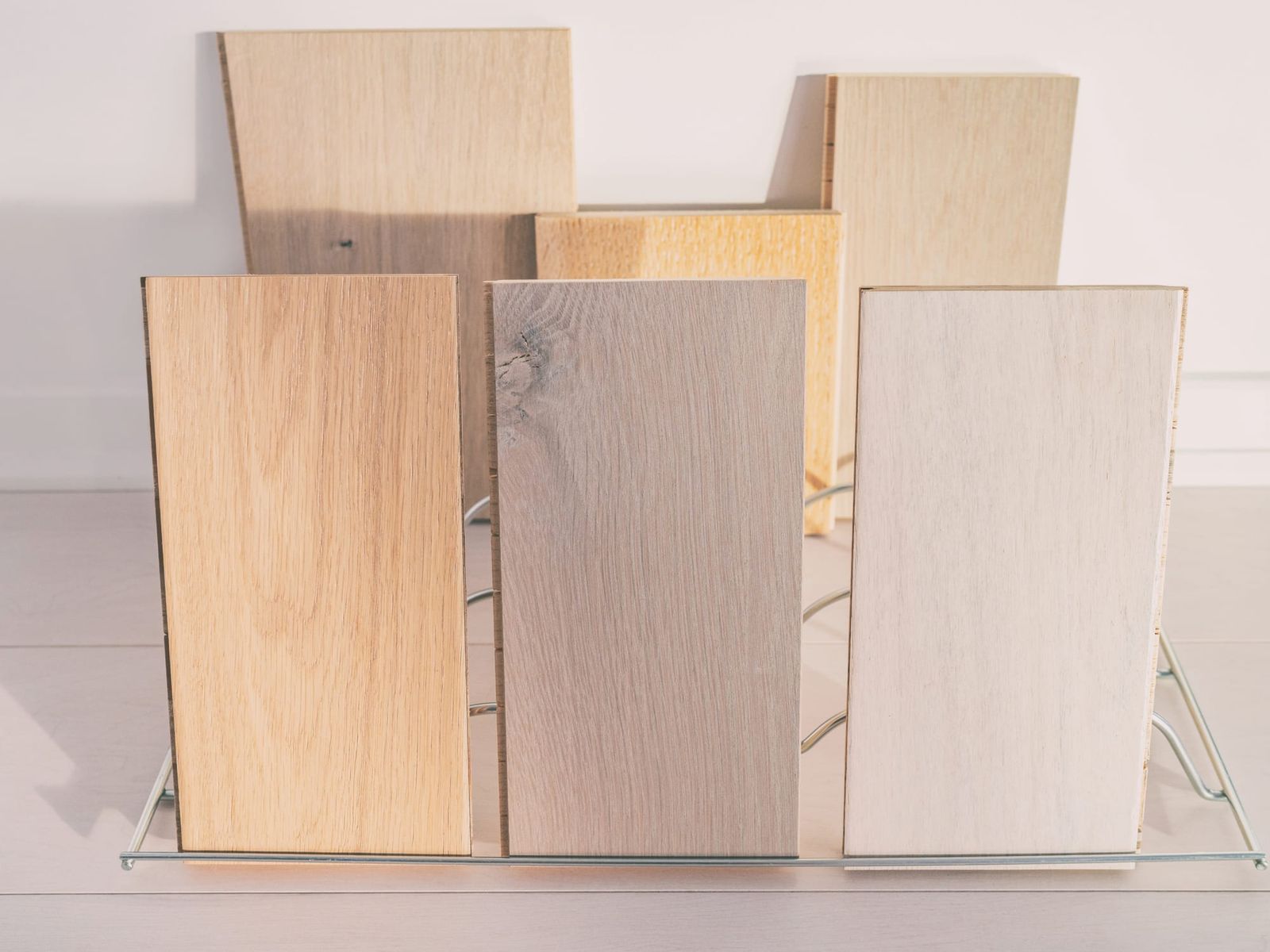
Photos rarely show how a bevel catches the light or how a matt finish feels underfoot. That’s why it’s worth visiting a specialist showroom where you can see full boards side by side and run your hand across the textures. At our Newstead showroom, you can compare bevelled edge flooring, square-edge boards and every finish, from smooth matt to oiled, across our engineered timber and oak flooring ranges.
Bevelled Edge Flooring FAQs
What does bevelled edge mean on flooring?
A bevelled edge is a small angled cut along the top edge of each board. When boards sit together, the cuts form a shallow V-groove that outlines each plank.
Is beveled or bevelled the correct spelling?
Both are correct. Bevelled is the Australian and British spelling, while beveled is the American spelling. They mean exactly the same thing.
Is bevelled edge flooring better than square edge?
Neither is better overall. Bevelled edges hide small height differences and look more natural, while square edges give a seamless, modern look and are easier to clean.
Do bevelled edges collect dirt?
They can collect some dust and crumbs. Vacuuming along the length of the boards with a soft brush head keeps the grooves clean.
What is the difference between a micro bevel and a standard bevel?
A micro bevel is a very slight edge that softens joins, while a standard bevel is deeper and makes each board stand out more clearly.
Can you sand bevelled edge engineered flooring?
Yes, if the timber layer is thick enough. A heavy sand usually removes 1 to 1.5mm, which takes out the bevels and leaves a flat floor.
Does laminate flooring have bevelled edges?
Many laminate floors do. Some have a real cut bevel, while others use a painted or printed bevel to mimic the look without changing the edge shape.
Which floor finish is best for families?
A brushed matt lacquer is usually the most practical choice, because it hides scratches, dust and footprints far better than gloss or smooth finishes.
Compare Bevels and Finishes Side by Side
Book a visit to our Newstead showroom and see how each edge profile and finish looks in real light before you choose.