Choosing floors
Water Resistant vs Waterproof Flooring: What’s the Difference?
 Roman Miller9 min read
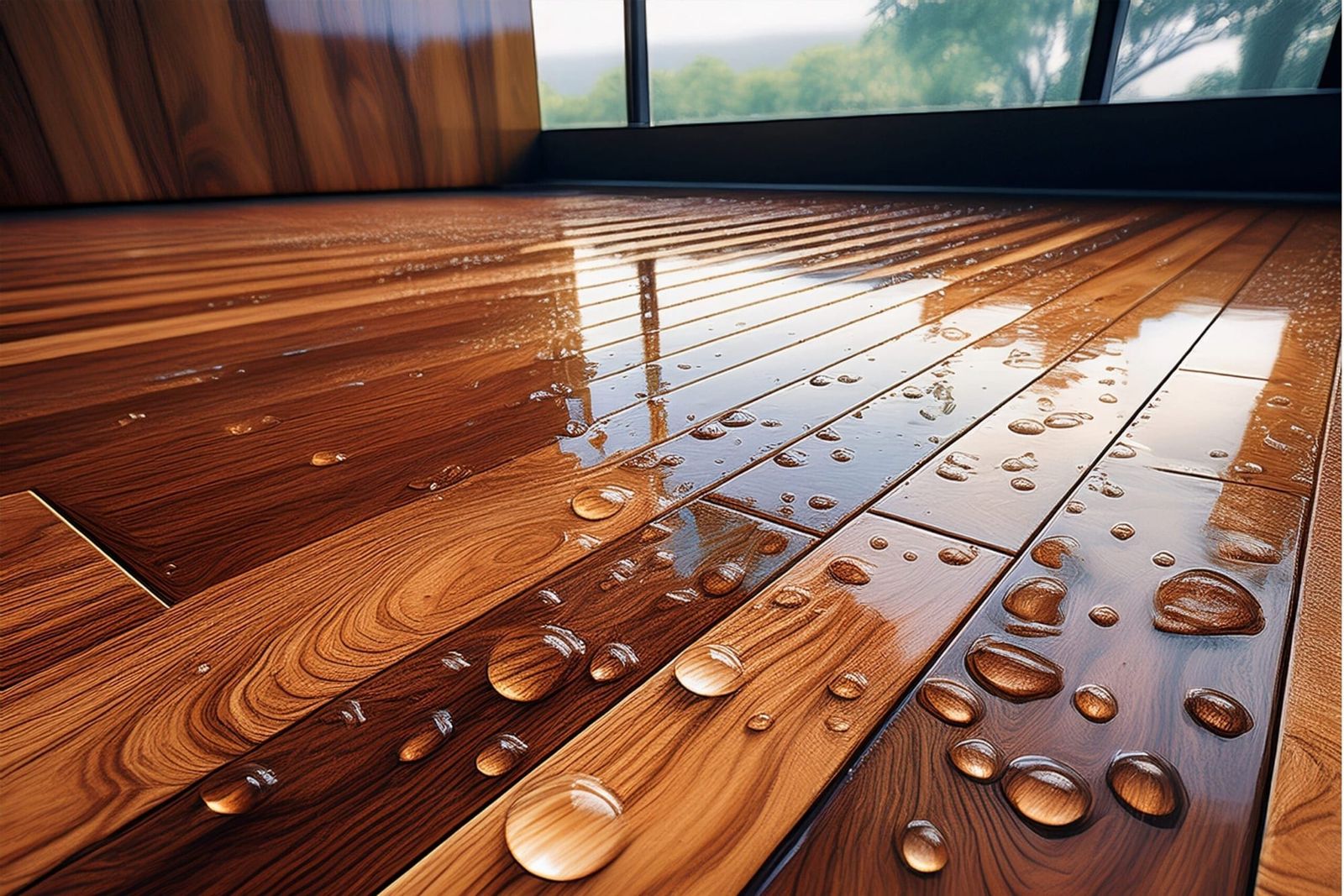
Walk into almost any flooring store in Australia, and you’ll see the words “waterproof” and “water resistant” on nearly every box. Some retailers call hybrid flooring 100 per cent waterproof, others insist it’s only water resistant, and laminate packaging talks about protection measured in hours. No wonder so many people feel unsure what they’re actually buying.
This guide explains water-resistant vs waterproof flooring in plain English, so you know exactly what you’re paying for: what each term really means, which floors fall into each group, what the labels and warranties don’t tell you, and which floor makes sense for each room in your home. We’ve written it for homeowners of every age, including older Australians and families helping parents choose a floor that’s safe, easy to care for and built to last. It comes from the team at LKV Flooring in Newstead, Brisbane.
Quick answer
A water-resistant floor can handle spills and splashes for a limited time if you wipe them up, but prolonged moisture can eventually cause damage. A waterproof floor is made from materials that don’t absorb water at all, so the boards themselves won’t swell. However, even a waterproof board installed as a click-together floor isn’t a sealed wet-area system, because water can still seep through the joins to the subfloor.
Water Resistant vs Waterproof: The Simple Difference
Water resistant
Think of a good rain jacket in a light shower.
It keeps water out for a while, but if it stays wet long enough, moisture eventually gets through. Water resistant floors handle everyday spills well, as long as you wipe them up within the time the manufacturer allows.
Waterproof
Think of a plastic bucket.
The material itself doesn’t absorb water, no matter how long it sits. A waterproof board won’t swell or soften from spills or mopping. The catch is that floors are made of many boards, and the gaps between them aren’t sealed.
When comparing water-resistant flooring with waterproof flooring, it also helps to remember that water can come from more than one direction. Spills arrive from above, but moisture can rise from a damp concrete slab below. That’s why installers test slab moisture and lay a moisture barrier under floating floors, regardless of how water-tolerant the boards are.
The Four Terms You’ll See, Decoded
Much of the confusion comes from four different ideas being used as if they mean the same thing. Here’s what each one really means.
- Water-resistant board: The board can cope with surface water for a set time, often stated in hours, before the core risks swelling.
- Waterproof core: The inside of the board, such as a stone composite core, doesn’t absorb water. This is what most “waterproof” claims really refer to.
- Water-resistant floor: How the installed floor behaves as a whole. Even with waterproof boards, joints and edges can let water through to the subfloor.
- Waterproofed wet area: A bathroom or laundry sealed with a membrane under the floor, as required by building rules. No floating floor replaces this.
In Australia, wet areas such as bathrooms must be waterproofed under the National Construction Code, using a membrane installed in line with the Australian Standard for wet-area waterproofing, AS 3740. That’s why a flooring brand calling its planks “waterproof” doesn’t mean you can skip proper bathroom waterproofing.
How Much Water Can Each Floor Handle?
The most useful way to understand water-resistant vs. waterproof flooring is to picture different levels of water exposure, from a quick spill to a flood.
A spill, wiped quickly
Almost every hard floor copes, including timber, laminate, hybrid, vinyl and tiles.
Water left for a few hours
Hybrid, vinyl and tiles are fine. Water-resistant laminate is usually fine within its rated time. Timber can start to mark.
Water left overnight or for a day or two
Hybrid boards and vinyl won’t swell, but water may seep through joins. Laminate depends on its rating. Timber is at risk.
Regular wet‑area use
Tiles and properly installed glue-down vinyl perform best. Floating floors are generally not recommended.
A burst pipe or flood
Tiles survive best. Hybrid boards may be reusable once dried, but the subfloor and underlay usually need attention. Laminate and timber often need replacing.
Which Floors Are Water Resistant and Which Are Waterproof?
| Flooring | Core material | Board rating | Best rooms |
|---|---|---|---|
| Hybrid | Rigid stone or wood-plastic composite | Waterproof core | Kitchens, living areas, entries, low-risk laundries |
| Vinyl plank and sheet | Flexible vinyl | Waterproof core | Bathrooms (glue-down), laundries, kitchens |
| Water resistant laminate | High-density fibreboard with sealed edges | Water resistant for a rated time | Living areas, bedrooms, kitchens with care |
| Standard laminate | High-density fibreboard | Limited water resistance | Bedrooms and dry living areas |
| Engineered and solid timber | Real timber | Water resistant surface when coated | Living areas, bedrooms |
| Tiles and stone | Ceramic, porcelain or stone | Waterproof material | Bathrooms, laundries, outdoor-adjacent areas |
General guide. Always follow the manufacturer’s instructions and warranty for your exact product.
For a deeper look at the most popular option, read what is hybrid flooring.
Understanding Laminate Water Ratings
Modern laminate handles water much better than it did 15 years ago. Many ranges now include sealed or water-repellent edges and quote a rating in hours, commonly somewhere between 24 and 72 hours. That figure tells you how long surface water can sit before it risks damaging the board if you don’t wipe it up.
This is genuinely useful information, because it turns a vague promise into a measurable one. A 72-hour rated laminate gives you a comfortable buffer for spills you don’t notice straight away, but it still isn’t designed for standing water or wet rooms. Quick-Step, for example, offers water-resistant ranges with treated edges; see our Quick-Step flooring range to compare options.
Marketing Claims vs Reality
- “100% waterproof flooring.” Usually means the board core won’t absorb water. The installed floor can still let water through its joins.
- “Suitable for bathrooms.” Check the fine print. Many products allow bathrooms only with sealed edges, approved underlay and no standing water.
- “Waterproof means no water damage.” Water trapped underneath can still cause mould, odours or subfloor damage, even if the boards survive.
- “Water resistant means it can handle a leak.” Only for the rated time. A slow, hidden leak from a dishwasher can exceed it.
What Your Warranty Probably Says
Flooring warranties define the real meaning of “waterproof”. Before buying, it’s worth reading the water section carefully, because many warranties exclude:
- Water damage from flooding, burst pipes or appliance leaks
- Standing water left beyond a set number of hours
- Floors installed in wet areas without sealed perimeters
- Damage to the subfloor or underlay beneath the boards
- Steam mop use or harsh cleaning products
Choosing Floors for Older Australians and Their Families
Safety, comfort and easy care matter more than labels
If you’re choosing a floor for yourself in retirement, or helping a parent update their home, water performance is only part of the picture—slips, trips and ease of cleaning matter just as much.
Slip resistance
Look for a slip rating suited to the room. In bathrooms, tiles with a higher slip rating are safer than smooth surfaces.
Fewer trip hazards
Choose one continuous floor through living areas and use low-profile trims where floors meet.
Easy, gentle cleaning
Hybrid and vinyl are kept clean with a quick vacuum and a gentle damp mop, so there’s no polishing or scrubbing.
Comfort and warmth
Softer floors like vinyl and timber are kinder on joints than tiles, and rugs add grip and warmth.
For homes where spills from walking aids, kettles, or pets are more likely, a water-resistant hybrid floor in living areas combined with slip-rated tiles in bathrooms is often a sensible, low-worry combination.
Room‑by‑Room: What to Choose
| Room | Best choice | Why |
|---|---|---|
| Bathrooms and ensuites | Slip-rated tiles or glue-down vinyl | Fewer joints and a sealed wet area beneath |
| Laundry | Tiles, glue-down vinyl or hybrid | Match the floor to how often water is likely to pool |
| Kitchen | Hybrid or water-resistant laminate | Handles everyday spills when wiped promptly |
| Living and dining | Hybrid, laminate or engineered timber | Low water risk, so choose for look and comfort |
| Entries and hallways | Hybrid | Copes with wet shoes, umbrellas and storm-season mud |
| Bedrooms | Laminate, timber or hybrid | Very low water exposure |
Water and Flooring in Brisbane Homes
Brisbane brings its own challenges: sudden summer storms, wet shoes and umbrellas at the door, humid air for months at a time, and in some areas, flood risk. Water-resistant and waterproof floors help with everyday spills, but humidity affects floors differently. Hybrid stays stable, laminate can move slightly with humidity, and timber expands and contracts more noticeably. If you’re in a flood-prone suburb, tiles or hybrid on the ground floor will usually recover better than laminate or timber. Want to replace old tiles with something warmer? Our flooring over tiles article covers what to check first.
What to Do If Water Gets Under Your Floor
Stop the water (immediately)
Shut off the supply and mop up any pooled water.
Record it (same day)
Take photos for insurance and warranty claims.
Dry the room (next 24 hours)
Use fans, air conditioning or a dehumidifier.
Get it checked (within 48 hours)
Ask an installer to test moisture beneath the floor.
Our timber floor repair guide explains what you can save and what needs replacing.
Questions to ask before you buy
- Is the core waterproof, or the whole floor?
- How many hours of standing water is the product rated for?
- Is it approved for kitchens, laundries or bathrooms?
- What does the warranty exclude about water?
- What underlay and edge sealing are required?
- What slip rating does it have for wet areas?
Water Resistant vs Waterproof Flooring: FAQs
What is the difference between water resistant and waterproof flooring?
Water resistant flooring can handle spills for a limited time if they’re wiped up, while waterproof flooring is made from materials that don’t absorb water at all. Neither turns a floating floor into a sealed wet area.
Is hybrid flooring waterproof or water resistant?
Hybrid has a waterproof core that won’t swell, but an installed hybrid floor is best described as water resistant, because water can seep through the click joints.
Is laminate flooring waterproof?
No. Laminate has a fibreboard core, so it’s water resistant at best. Many modern ranges are rated to handle surface water for around 24 to 72 hours.
Can I put waterproof flooring in a bathroom?
Only where the product’s maker specifically allows it and a compliant waterproof membrane sits underneath. Slip-rated tiles or glue-down vinyl are usually the safer choice.
Does waterproof flooring prevent mould?
Not entirely. Water trapped beneath a floor can still cause mould or odours, so leaks should be dried out quickly.
Is vinyl flooring waterproof?
Vinyl is made from waterproof material. Glue-down vinyl with tight seams performs best in wet areas.
What is the safest flooring for older people?
A floor with good slip resistance, few trip hazards and easy care is safest. Many families choose hybrid for living areas and slip-rated tiles for bathrooms.
Will a water‑resistant floor survive a flood?
Usually not without help. Boards may survive, but underlay and subfloors often need drying or replacement after flooding.
Choosing the Right Floor for Water and Peace of Mind
The difference between water-resistant and waterproof flooring is simple once you clear away the jargon. Waterproof describes what the boards are made of. Water-resistant describes how long the boards, or the finished floor, can cope with moisture. No floating floor replaces a properly waterproofed wet area, and the best choice depends on each room and the people living in it.
At LKV Flooring, we help Brisbane families, including older homeowners and their children, choose floors that are practical, safe and easy to look after. Visit our Newstead showroom, and we’ll walk you through water ratings, slip resistance and warranties in plain English, so you can make a decision you feel sure about.